When Is the Best Time to Visit the Great Barrier Reef from Cairns?
Reef boats leave Cairns all year. How the dry and wet seasons, stinger suits, water temperature, whales and school holidays shape a day on the reef.
The dry season, roughly May to October, is the most comfortable time for a reef trip from Cairns. The air is cooler and less humid, rain is rarer, and visibility is at its best on average. June to October is the sweet spot for most visitors.
Every other month works too. Reef boats run all year, the water never gets cold, and the sea on the day you go matters more than the month you pick. If your dates are fixed, book them and plan around the season.
Check Availability
Dry season and wet season at a glance
Cairns has two seasons, and they shape the reef day more than spring or autumn ever do.
The dry season runs roughly from May to October. Days are warm and settled, humidity drops, and wind is the main thing to watch. Visibility underwater tends to be better through these months, and a calm dry-season morning on the outer reef is about as good as reef days get.
The wet season runs roughly from November to April. It is hotter and much more humid, with heavy downpours that often clear quickly, and it is also cyclone season. The water is at its warmest, the crowds are thinner outside the Christmas holidays, and marine stingers are around, so you snorkel in a Lycra suit.
Neither season promises calm water. Wind and swell come and go in any month, and visibility can change from one day to the next at the same site. That is why skippers pick the day’s reef sites on the morning.
Stinger season and what it means on the reef
Marine stingers, the box jellyfish and the tiny Irukandji of tropical Queensland, are in the water roughly from November to May, and in the far north the season can stretch from October to June. Stinger nets close off some mainland beaches over those months.
Out on the reef the risk is low, and the trips keep running. Operators supply Lycra stinger suits, or hire them out, and recommend you wear one through the season. They double as sun protection, which after a few hours face-down in the water is no small thing.
Check the inclusions. The Outer Great Barrier Reef Full-Day Tour with Lunch includes Lycra suits along with five hours of reef time at Saxon and Hastings reefs, at $193. The Small-Group Snorkelling Tour (our breakdown) includes a stinger suit in season, and the All-Inclusive Half-Day Trip (our breakdown) gives you a Lycra suit in summer and a wetsuit in winter. Read our breakdown of the full-day tour for the day’s timings.
Water temperature and what to wear
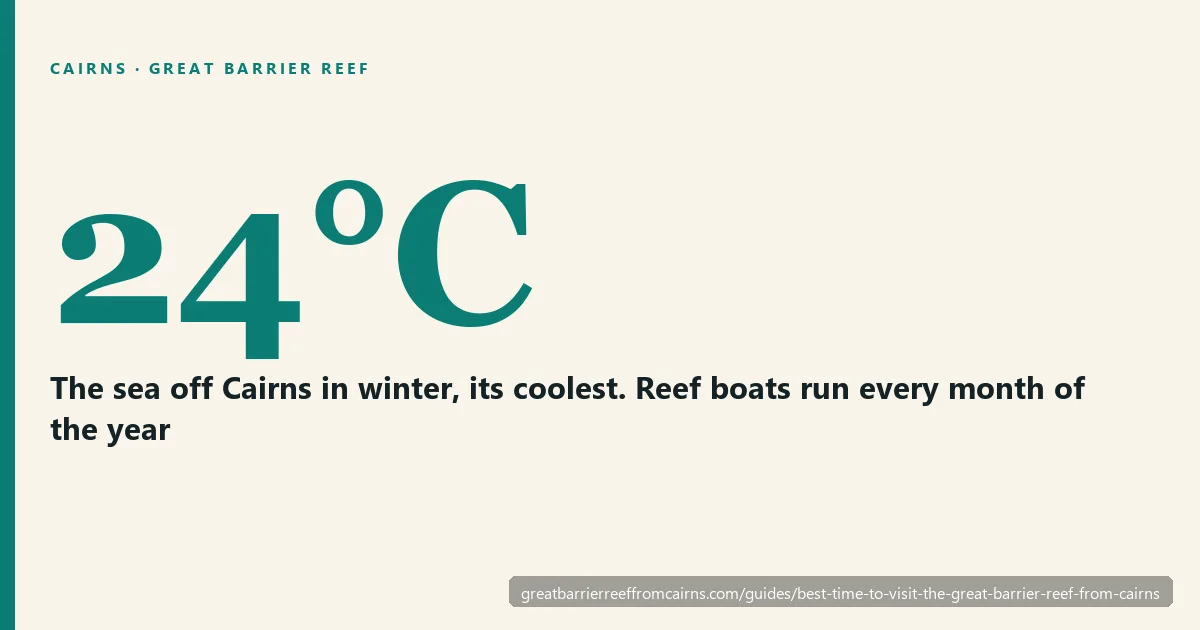
The sea off Cairns sits around 29°C in summer and around 24°C in winter. Summer water feels like a bath. Winter water is still warm by most standards, but after an hour or two of snorkelling many people start to feel it, so take the wetsuit if your boat offers one.
Most outer reef boats include some kind of suit. The Premium Catamaran Cruise (our breakdown) lists wetsuits and Lycra suits depending on the season, and the Premium Snorkelling and Diving Day Trip (our breakdown) adds hot freshwater showers for when you climb out. On the half-day boats from Reef Adventures, wetsuits are for hire.
Month by month
| Months | Season | Sea | Stingers | What to expect |
|---|---|---|---|---|
| January to March | Wet | Warmest, around 29°C | Yes, wear a suit | Hot, humid, heavy rain some days, cyclone risk, fewer visitors after late January |
| April and May | Wet easing to dry | Warm | Yes, tailing off | Humidity drops through May, Easter holidays busy |
| June to August | Dry | Coolest, around 24°C | Low | Settled weather, breezy days, whales on the move, school holidays late June to mid July |
| September and October | Dry | Warming | Low, can start in October | Calm, clear spells, school holidays late September |
| November and December | Wet begins | Warming fast | Yes | Heat and humidity build, stinger suits back on, summer holidays from mid December |
January to March
The wettest stretch of the year and the heart of cyclone season. Boats still go out on most days, and when they do the water is very warm. A cyclone or strong wind warning can cancel sailings, and operators then offer another date or a refund.
April and May
A transition. Rain eases, the air cools a little, and the stinger season winds down. April is a reasonable time to go if you keep a spare day in your plans for weather.
June to August
The coolest and most settled months, and the busiest. Humpback whales travel the Queensland coast in winter, and reef flights watch for them: the Outer Edges Scenic Flight (our breakdown) mentions whales in July and August, and the 30-Minute Helicopter Flight (our breakdown) from July to September. Sightings are luck on any trip. Our scenic flights page lists the options.
September and October
A comfortable pair of months. The weather is dry and warm, the water is warming up, and the stingers have mostly not arrived.
November and December
Heat and humidity build, the first big storms arrive, and stinger suits come back into use. Trips run as normal between weather days, and the Christmas holidays fill the boats from mid December.
School holidays and crowds
Australian families travel north in the school holidays, and Queensland’s are the ones that fill Cairns boats. The next dates are 12 December 2026 to 26 January 2027, then 26 March to 11 April, 26 June to 11 July, and 18 September to 4 October 2027. Other states’ holidays overlap these, especially in winter.
In those weeks the bigger catamarans and pontoons run full and the small-group boats sell out first, so book ahead. If you want a quieter day, a small group helps: the Half-Day Snorkelling Tour (our breakdown) caps at 27 guests and the All-Inclusive Half-Day Trip at 40. Our snorkelling tours page has more.
How to protect your reef day in any month
Book the reef early in your stay. If the boat cancels for weather, you still have days to rebook. Every Cairns tour on this site can be cancelled free of charge up to 24 hours ahead, and a few up to two days ahead.
Look at the marine forecast the day before. The Bureau of Meteorology publishes a four-day marine forecast, and one operator points guests straight to it. On a windy day, a bigger, faster boat or a pontoon with an underwater observatory copes better than a small boat. Our guide on how far the reef is covers crossings and seasickness.
Pick the trip to suit the season. In the wet months, an outer reef day on a large catamaran or a pontoon keeps you in shade and comfort between swims. In the dry season, it is easier to enjoy an island like Green Island or Fitzroy Island on land as well as in the water. Our guide to which reef tour suits you sorts the rest.
Frequently asked questions
What is the best month to visit the Great Barrier Reef from Cairns?
June to October, in the dry season, for cooler air, less rain and better visibility on average. September and October are warmer in the water with fewer stingers. Trips run in every month, and the sea on the day decides visibility.
When is stinger season in Cairns?
Roughly November to May, and October to June in the far north. Reef boats keep running and supply or hire Lycra stinger suits, which operators recommend you wear.
Is April a good time to visit the Great Barrier Reef?
Yes, with a spare day for weather. April sits at the end of the wet season, the air is starting to cool, stingers are still around so you wear a suit, and the Queensland Easter holidays make some days busy.
How warm is the water off Cairns?
Around 29°C in summer and around 24°C in winter. Winter snorkellers often choose a wetsuit, which many boats include.
Can you see whales from a Cairns reef trip?
Sometimes, in winter. Scenic flights watch for humpbacks from about July to September, and some cruise guests have spotted them from the boat. No trip guarantees a sighting.
Ready to pick a date? Check availability on the full-day tour with five hours of reef time.
Two Outer Reef Sites, One Day on a Catamaran
Snorkelling gear and a guided snorkel tour, a chef-prepared lunch, morning and afternoon tea, and a marine life talk on board. Rated by more than 3,800 guests, with free cancellation.
Check Availability & Book