Great Barrier Reef Liveaboards from Cairns: Are They Worth It?
Pro Dive, OceanQuest, Reef Encounter, Coral Sea Dreaming and Spirit of Freedom compared: prices, dives, cabins and who a night on the reef suits.
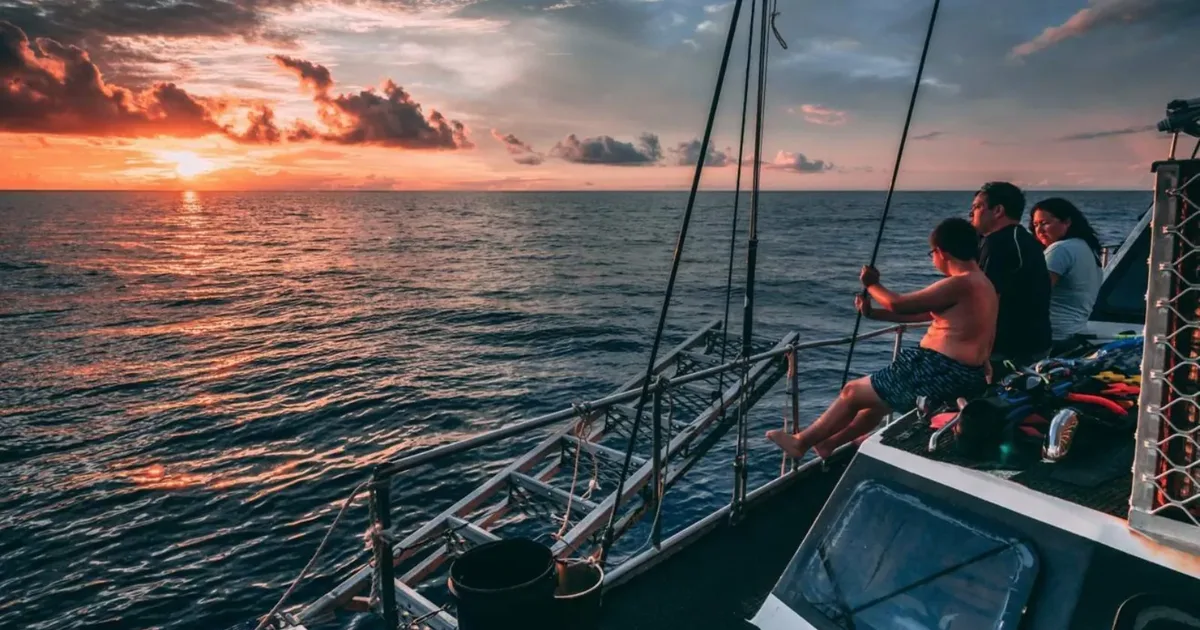
A liveaboard is worth it if you are a certified diver or a keen snorkeller with two or three days to give the reef. You wake up on the outer reef, get in the water before the day boats arrive and can dive after dark, which no Cairns day trip offers. If a few hours of coral and fish will satisfy you, a good outer reef day tour costs far less and gets you back to your hotel for dinner.
Cairns liveaboards are not all alike. A 16-metre sailing boat with 12 guests, a 35-metre floating hotel that stays on the reef, and an expedition boat heading 240 km north to the Cod Hole are three different trips. This guide sets out who each one suits, what it costs and how many nights to book.
Check Availability
Which Cairns liveaboard should you choose?
| Liveaboard | Best for | Typical trip | Diving | Cabins | Book |
|---|---|---|---|---|---|
| Pro Dive Cairns | Certified divers who want as many dives as possible | 3 days / 2 nights | Up to 11 dives, 2 at night | Twin bunk and double cabins, shared bathrooms | 3-Day Dive Trip, from $768, 4.7/5 (35 reviews) |
| OceanQuest (Divers Den) | Couples, mixed diver and snorkeller groups, flexible stays | 1 to 5 nights | Up to 4 dives a day | Ensuite twin and double cabins | Overnight Snorkelling Trip, from $435, 4.4/5 (76 reviews) |
| Reef Encounter | Comfort, snorkellers, couples | 1 night or more | Optional dive packages, night dives | Ensuite staterooms with ocean views | Operator only: reefencounter.com.au |
| Coral Sea Dreaming | A small group on a sailing boat | 2 days / 1 night | Guided dives | Private double or shared cabins, shared bathrooms | 2-Day Liveaboard, from $470, 4.6/5 (110+ reviews) |
| Spirit of Freedom | Experienced divers heading for the Ribbon Reefs, Cod Hole and Coral Sea | 3 to 7 nights | Expedition diving, 4 to 5 dives on full days | Ensuite cabins plus quad share | Operator only: spiritoffreedom.com.au |
GetYourGuide prices are per person in US dollars. Operator fares further down are in Australian dollars (A$).
Choose Pro Dive if diving is the reason you are going. Choose OceanQuest or Reef Encounter if you want a cabin with its own bathroom or are travelling with a snorkeller. Coral Sea Dreaming suits you if a small group matters most, and Spirit of Freedom if you are already an experienced diver and want to go well beyond the usual Cairns outer reef sites.
What is a Great Barrier Reef liveaboard?
A liveaboard is a boat you sleep on while you visit the reef. Cairns has two versions.
Some boats leave Cairns with one group and spend the whole trip moving between reef sites. Pro Dive’s three-day trip works like this: the boat leaves Cairns on a fixed three-day, two-night itinerary and comes back with the same passengers.
Others work as floating hotels. Reef Encounter stays out on the outer reef, and a transfer boat brings guests out from Cairns each day, so you can arrive and leave on different dates. OceanQuest uses the same model. You travel out on the Divers Den day boat SeaQuest, snorkel or dive during the day, then move across to OceanQuest in the afternoon, for one to five nights.
Neither system is better. The fixed trip feels like a dive expedition. The floating hotel lets you choose the length of your stay and tends to suit couples and mixed groups.
Why stay overnight on the Great Barrier Reef?
You get more reef time, and the gap is bigger than it looks. On a Cairns day trip, around three hours of your day goes on the crossing out and back. On a liveaboard, you are still at the reef when the day boats leave.
You wake up already moored on the reef. Depending on the boat, your first dive or snorkel can be early in the morning, with more sessions through the day and another after sunset.
Reef Encounter, for example, schedules morning and afternoon water sessions and a night dive for certified divers, with up to five sessions on a full day. Certified divers are limited to four dives a day, the night dive included.
Pro Dive’s three-day itinerary includes up to 11 dives, two of them at night, at outer reef sites on Flynn, Thetford, Milln and Pellowe reefs.
That is the case for a liveaboard: you pay for reef time at hours day visitors never see, not only for a bunk.
The best Great Barrier Reef liveaboards from Cairns
The five boats below cover the main choices from Cairns, from a dive-heavy three-day trip to a week-long expedition.
1. Pro Dive Cairns: the most dives in three days
Best for: certified divers, newly qualified divers, dive courses, and travellers who put diving ahead of cabin comfort.
If you are certified and want a straightforward three-day dive trip from Cairns, start your comparison with the Pro Dive 3-day liveaboard.
It includes up to 11 dives, two of them at night, chosen from 19 dive sites across Flynn, Thetford, Milln and Pellowe reefs.
What you get
On GetYourGuide the trip starts from $768 per person and is rated 4.7/5 from 35 reviews, a small sample. Diving gear, meals, your cabin and transfers are included. Pro Dive also sells the trip directly in Australian dollars, so compare the two prices for your dates.
Do not book it for luxury. The cabins are air-conditioned twin bunk and double rooms, and the bathrooms are shared. Bring your own towel, because Pro Dive supplies bedding but not towels.
You are paying for an itinerary that is mostly diving.
Who should book it?
Book Pro Dive if your ideal day runs dive, eat, dive, eat, dive, sunset, night dive, sleep, and then again tomorrow.
It suits solo divers, because Pro Dive can pair a single traveller with another guest of the same sex in a twin cabin, so you do not have to pay for a private room.
Pro Dive also runs PADI courses on these trips, including Open Water, Advanced Open Water and Nitrox. The Pro Dive 5-Day Learn to Dive course costs from $923 and has a 5.0/5 rating, though from only 10 reviews.
The trade-off
A couple who want a private bathroom, a bigger cabin and something closer to a small hotel will be happier on OceanQuest or Reef Encounter.
Best reason to choose it: the most diving you can fit into three days.
2. OceanQuest by Divers Den: for divers and snorkellers together
Best for: mixed groups, couples, a first liveaboard, flexible trip lengths, and snorkellers who want a night on the reef.
OceanQuest sits between a dive boat and a floating hotel. It is a 35-metre liveaboard working Norman, Saxon and Hastings reefs, and it visits two of its 17 outer reef sites each day. Guests stay from one to five nights.
Every cabin has its own bathroom: 18 twin and four double cabins, all air-conditioned. That matters if you are a couple or simply dislike sharing a bathroom on a boat.
Snorkellers are catered for
Snorkelling is included for every guest, and Divers Den sells overnight snorkelling packages of their own. On GetYourGuide the Divers Den Overnight Snorkelling Trip starts from $435 and is rated 4.4/5 from 76 reviews. You can add an introductory scuba dive once you are on board.
That makes OceanQuest one of the easiest choices for a couple where one person dives and the other snorkels.
Diving
Certified-diver packages include up to four dives a day, all equipment and air fills. Night dives are included; your first night dive needs a guide, which costs A$20 extra.
OceanQuest also offers a fluoro night dive, using special torches and filters to show the natural fluorescence of corals and other reef animals. It costs extra and needs previous night-diving experience.
Current pricing
Divers Den’s own certified-diver fares, valid to 31 March 2027:
| Stay | Certified diver | Snorkeller |
|---|---|---|
| 2 days / 1 night | A$835 | A$730 |
| 3 days / 2 nights | A$1,160 | A$950 |
| 4 days / 3 nights | A$1,485 | A$1,170 |
| 5 days / 4 nights | A$1,810 | A$1,390 |
| 6 days / 5 nights | A$2,135 | A$1,610 |
The fares include equipment, meals, GST and the reef’s environmental management charge. Overnight introductory-dive packages start at A$820 for two days with one intro dive. The certified-diver package is not on GetYourGuide, so divers book it with Divers Den directly.
The trade-off
OceanQuest stays out at the reef, so you reach it on the SeaQuest transfer boat. Some travellers like the flexibility; others prefer leaving Cairns on the boat they will sleep on.
Best reason to choose it: probably the easiest Cairns liveaboard for a group of divers and non-divers.
3. Reef Encounter: the most comfortable cabins
Best for: couples, snorkellers, less confident swimmers, and travellers who want a floating-hotel feel.
Reef Encounter is a 35-metre catamaran that carries up to 42 guests in 21 air-conditioned ensuite staterooms, each with an ocean-view window, plus a lounge and sun deck.
It stays on the outer reef and takes guests by a daily transfer boat from Cairns, so you can stay one, two, three or more nights without fitting your holiday around a fixed departure.
Why snorkellers should look closely at it
Snorkelling is included in the accommodation package without a session limit, and the crew help guests who are not confident swimmers. Introductory scuba, certified diving and dive courses are added separately.
That suits a group where the reef matters more than a scuba card. You can snorkel through several sessions while a partner dives, without feeling like the non-diver on someone else’s dive holiday.
Pricing
Queensland’s official tourism site lists Reef Encounter from A$625 per person for a two-day, one-night snorkelling stay. Longer stays and dive packages cost more; Reef Encounter’s own site gives the current rates.
When you compare prices, remember that a cheap-looking Reef Encounter fare is a snorkelling accommodation package, while Pro Dive’s headline price already includes up to 11 dives. Compare the package you will actually use.
Reef Encounter is not sold on GetYourGuide or Viator, so book it with the operator.
The trade-off
Divers who want every dive bundled into one simple fare may find Pro Dive easier to understand and better value.
Best reason to choose it: one of the most comfortable ways to sleep on the outer reef without everyone in your group having to dive.
4. Coral Sea Dreaming: the small-group option
Best for: couples, solo travellers, and snorkellers and divers who want a small boat.
Most Cairns reef trips carry dozens of passengers. The Coral Sea Dreaming 2-day liveaboard carries up to 12 guests on a 16-metre sailing boat, which makes it one of the smallest overnight reef trips from Cairns.
The trip lasts two days and one night. The crew choose among outer reef moorings such as Flynn and Milln reefs according to weather, tide and reef conditions.
Why choose a small boat?
A small boat gives you more than fewer people in your photos. With 12 guests you quickly know the crew and everyone else on board, and the trip feels like a small sailing trip, not an organised floating resort.
Every dive is guided, which suits divers who would rather follow a guide than find their own way round a reef with a buddy.
Accommodation
You can choose a private cabin with a double bed or a single bed in a shared cabin. Bathrooms are shared.
On GetYourGuide it costs from $470 per person and is rated 4.6/5 from 110+ reviews; read our breakdown for what that fare covers. Coral Sea Dreaming’s own prices, in Australian dollars, run from A$669 for snorkelling in a shared cabin to A$719 in a private cabin, A$789 to A$839 with one introductory dive, and A$1,019 to A$1,069 for certified divers with all dives included. A marine park levy of A$10 per person per day is paid on board.
The trade-off
A 16-metre boat will never have the space, stability or facilities of a 35-metre catamaran. If you get seasick easily or want hotel-style cabins, Reef Encounter or OceanQuest will suit you better.
Best reason to choose it: the smallest group on any overnight trip from Cairns.
5. Spirit of Freedom: for experienced divers
Best for: experienced scuba divers bound for the Ribbon Reefs, Cod Hole, the Coral Sea and Osprey Reef.
Spirit of Freedom belongs in this guide, but it is a different kind of trip. Most Cairns liveaboards stay at outer reef sites within reach of the city. Spirit of Freedom runs three-, four- and seven-night expeditions north to the Ribbon Reefs, the Cod Hole and the remote Coral Sea.
The three-night trip ends at the Cod Hole, about 240 km north of Cairns, after up to 11 dives, one of them at night. You need at least Open Water certification and 10 ocean dives, five of them in the last 12 months.
The seven-night trip adds two days at Osprey Reef, an old volcanic atoll about 220 km offshore with steep walls and plenty of sharks, when the weather allows the crossing.
Who should book Spirit of Freedom?
Not someone wondering whether they might enjoy a first introductory dive. This trip is for divers who already know they love scuba and will plan part of an Australian holiday around it.
The seven-night trip lists 26 dives, with four or five dives on most full days, at sites no Cairns day boat reaches.
The trade-off
It costs much more and takes far more of your holiday. Spirit of Freedom’s own fares start at A$2,500 per person in a quad-share cabin for the three-night Cod Hole and Ribbon Reefs trip, and A$4,750 for seven nights; private cabins cost more. It is not sold on GetYourGuide or Viator.
Best reason to choose it: you want a proper dive expedition to the northern Great Barrier Reef and the Coral Sea, not just more time on the Cairns reefs.
Pro Dive vs OceanQuest vs Reef Encounter
These are the three boats most Cairns visitors end up comparing.
| Pro Dive | OceanQuest | Reef Encounter | |
|---|---|---|---|
| Best for | Diving | Mixed groups | Comfort and snorkelling |
| Usual stay | 3 days / 2 nights | 2 to 3 nights | 2 to 3 nights |
| Ensuite cabin | No | Yes | Yes |
| Certified diving | Main product | Main option | Optional package |
| Snorkelling | Available | Very good | Very good |
| Intro diving | Courses available | Yes | Yes |
| Night diving | Yes | Yes | Yes |
| Solo travellers | Good value | Good | Good |
| Feels like a dive expedition | Most | Less | Less |
| Feels like a floating hotel | Little | Yes | Most |
Choose Pro Dive if…
Your answer to “do I want to dive?” is yes, again and again. The cabins are simpler, but up to 11 dives in three days is hard to beat when underwater time is the point of the trip.
Choose OceanQuest if…
You want a comfortable cabin and still care a lot about diving. It suits couples where one person dives more than the other.
Choose Reef Encounter if…
Your group includes snorkellers, first-time divers or people who want the experience of living on the reef. The large ensuite staterooms make it the least “hardcore dive boat” of the three.
Is a Great Barrier Reef liveaboard worth it for snorkellers?
Yes, if you pick the right boat. You do not have to scuba dive to get a lot out of sleeping at the reef.
Reef Encounter runs up to five water sessions on a full day, with snorkelling included in every one. OceanQuest sells dedicated overnight snorkelling packages. For a keen snorkeller the advantages are much the same as for a diver:
- more reef sites
- several sessions a day, not one or two
- quieter water after the day visitors leave
- early-morning reef time
- sunrise and sunset offshore
- the option to try an introductory dive
If you usually tire of snorkelling after 20 or 30 minutes, three days on a liveaboard is more than you need. A good outer reef day trip such as the Premium Catamaran Cruise ($193, 4.8/5 from 3,950+ reviews) will give you plenty. Our snorkelling guide compares the day boats.
Is a liveaboard worth it if you don’t scuba dive?
If you enjoy snorkelling, it can be. If you do not want to get in the water at all, it usually is not.
Cairns pontoon tours have semi-submersibles, glass-bottom boats and underwater observatories built for visitors who want to see the reef and stay dry. A liveaboard’s advantage is repeated time in the water; pay for a night on board and skip most of those sessions, and you lose most of the reason to go. Our guide for non-swimmers covers the dry options.
Can beginners scuba dive on a Cairns liveaboard?
Yes. Several Cairns liveaboards take complete beginners.
OceanQuest sells introductory dive packages and takes first-time divers down with an instructor, to a maximum of 12 metres, subject to the usual medical declaration.
Reef Encounter also takes introductory divers and runs SSI dive courses on board.
Both Divers Den and Pro Dive run full Open Water courses that combine pool and theory training in Cairns with overnight training dives on the reef. On GetYourGuide the Divers Den 4-Day PADI Open Water Course starts from $733 and is rated 4.7/5 from 52 reviews.
If you are not sure scuba is for you, do not book the most dive-heavy boat. On OceanQuest or Reef Encounter you still have excellent snorkelling if you try one dive and decide breathing through a regulator is not for you.
Why night diving is a big reason to choose a liveaboard
A night dive is the one thing a Cairns day trip cannot give you. After sunset the reef changes: animals that hide all day come out, and familiar coral looks different by torchlight.
Pro Dive includes two night dives in its three-day certified-diver trip. Reef Encounter schedules night dives for certified divers, and OceanQuest runs standard night dives plus the optional fluoro dive.
If you have never dived after dark, it may well be the dive you remember longest. Your first ever scuba dive cannot be a night dive, though: operators set extra certification, experience or guide requirements.
What reef sites do Cairns liveaboards visit?
There is no single place called “the Cairns Great Barrier Reef”. Each operator uses its own reefs and moorings.
- Pro Dive uses Flynn, Thetford, Milln and Pellowe reefs.
- OceanQuest usually works Norman, Saxon and Hastings reefs.
- Reef Encounter picks sites across several outer reef systems according to conditions.
- Coral Sea Dreaming chooses among outer reef moorings such as Flynn and Milln according to weather, tide and current.
- Spirit of Freedom goes much further north, to the Ribbon Reefs, the Cod Hole and, on longer trips, Osprey Reef in the Coral Sea.
Asking which liveaboard visits the best reef does not get you far. Conditions change, and a skipper choosing the right site for the day’s wind, tide and visibility can matter more than one famous mooring booked months ahead. Our outer reef guide explains how these reefs differ.
How many nights should you stay?
One night
Choose two days and one night if this is your first liveaboard or you are fitting the reef into a longer Queensland trip. You get a sunset, a night offshore and a second morning at the reef without giving up much of your holiday. It is the easiest way to find out whether liveaboard life suits you.
Two nights
For most divers, three days and two nights is the best length. You get one full day when you wake up on the reef and go to bed there again. Reef Encounter recommends at least three days and two nights for exactly this reason, and it is the standard Pro Dive itinerary.
Three nights or more
Book three nights or more if scuba is one of the main reasons for your trip to Australia. Once you look at four- to seven-night trips, compare the outer reef boats with Spirit of Freedom’s expedition routes. At that point you are choosing a dive holiday, not adding a reef trip to a Cairns stay.
How much does a Cairns Great Barrier Reef liveaboard cost?
Starting prices from the operators, in Australian dollars, for stays up to 31 March 2027:
| Trip | Starting price | Example |
|---|---|---|
| 2 days / 1 night, snorkelling | A$625 to A$730 | Reef Encounter, Coral Sea Dreaming, OceanQuest |
| 2 days / 1 night, one intro dive | A$789 to A$839 | Coral Sea Dreaming, OceanQuest |
| 2 days / 1 night, certified diving | A$835 to A$1,069 | OceanQuest, Coral Sea Dreaming |
| 3 days / 2 nights, snorkelling | A$950 | OceanQuest |
| 3 days / 2 nights, certified diving | A$1,160 | OceanQuest; Pro Dive from $768 (US) on GetYourGuide |
| 3-night Ribbon Reefs expedition | A$2,500 | Spirit of Freedom, quad share |
| 7-night Coral Sea expedition | A$4,750 | Spirit of Freedom, quad share |
Use these as planning figures. Cabin type, dive package, fuel and marine park charges, gear hire, Nitrox and guided dives all change the final price, and operators change fares by season.
The fair comparison for a three-day liveaboard is three separate day tours, plus gear, meals, three nights in a Cairns hotel and six crossings of open water. For a keen diver, the liveaboard starts to look much more reasonable.
Liveaboard vs three Great Barrier Reef day trips
| Liveaboard | Separate day trips | |
|---|---|---|
| Crossing to the reef | Once | Every day |
| Early morning on the reef | Yes | No |
| Sunset on the reef | Yes | No |
| Night diving | Yes | No |
| Number of dives | Usually many more | Usually 2 to 3 a day |
| Hotel comfort | Lower | Higher |
| Restaurant choice | No | Yes |
| Flexibility | Lower | Higher |
| If you get seasick | You stay on board | Back ashore each evening |
| Time immersed in the reef | A lot | Some |
If you want one excellent snorkel, book a day tour; our day-trip guide shows what that day looks like. If you are already wondering whether three day trips would be enough, a liveaboard makes more sense.
What is life on a Great Barrier Reef liveaboard like?
The days repeat in a pleasant way. Wake up, eat, get in the water, shower, eat, talk about what you saw, get back in the water.
A typical full day on OceanQuest has dive and snorkel sessions around 8:30 and 10:30, lunch, an afternoon session, dinner and then a night dive. Reef Encounter keeps a similar schedule.
There is downtime, but do not picture a cruise ship. The entertainment is the reef. If you want pools, shows, big restaurants and spacious rooms, stay in Cairns and take day tours. If sitting on deck in dry clothes after a night dive, moored above the reef, sounds better, a liveaboard is for you.
What should you pack?
Pack much less than for a hotel stay. A small overnight bag is easier on board than a suitcase.
- swimwear
- reef-safe sun protection and a hat
- sunglasses
- lightweight clothes
- something warmer for the evenings
- toiletries
- a reusable water bottle
- your certification card and logbook if you dive
- seasickness tablets if you usually need them
- phone or camera and a charger
- dry clothes for the trip home
Check the towel policy. OceanQuest supplies bedding and bath towels; Pro Dive supplies bedding but asks you to bring a towel. Operators can usually store large luggage ashore.
Will I get seasick on a liveaboard?
You might. A large catamaran is usually steadier than a small monohull, but no boat is immune to Coral Sea swell.
Once a liveaboard reaches a sheltered mooring it is not moving all the time, which helps. If you hate boats, remember that your hotel is the boat.
If you get motion sick easily, choose a larger boat such as Reef Encounter or OceanQuest over a small sailing boat, however romantic it looks. If you take seasickness tablets, follow the packet and take them early enough to work before the crossing out.
Can you fly after a Great Barrier Reef liveaboard?
Plan this before you book. After several days of repeated diving, do not book a flight for the afternoon you get back to Cairns.
Divers Den’s guidance, based on Queensland diving rules, is at least 12 hours before flying or going to altitude after a single no-decompression dive, and 24 hours after several dives a day over consecutive days. It counts 300 metres (1,000 feet) or more as altitude.
That covers more than flights. The Atherton Tablelands behind Cairns sit above that height, so a Tablelands day straight after a liveaboard can also be a problem. Spend the day after your last dive at sea level in Cairns and fly later. Our scuba diving guide covers the medical and flying rules in more detail.
What is the best time of year for a Cairns liveaboard?
Cairns liveaboards run all year, so no single month makes the reef suddenly good.
From May to October the weather is usually drier and less humid. From November to April the water is warmer and the weather hotter and wetter. A liveaboard has one advantage over a fixed pontoon: the crew can often choose among several moorings to suit the day’s conditions.
Winter has one extra draw. Dwarf minke whales visit the northern Great Barrier Reef around June and July, and operators with a permit can run regulated swims when whales turn up. Sightings are never guaranteed.
For an ordinary outer reef liveaboard, choose your dates to suit the rest of your Queensland trip. Our best time to visit guide goes through the year month by month.
Is three days on a liveaboard too much?
Not if you love diving. Possibly, if you have never snorkelled and are not sure you like boats.
So start with how much of your holiday you want to spend in the water, not which boat. If the answer is as much as possible, book two or three nights. If you would like to see the reef but also want restaurants, rainforest and a comfortable hotel, take a day trip.
Who should not book a Great Barrier Reef liveaboard?
Skip it if:
- You dislike boats or get badly seasick.
- You only want one short snorkel.
- You want nightlife or a choice of restaurants every evening.
- Your time in Cairns is already very short.
- You are flying soon after several days of diving.
- You want to see the reef while staying completely dry.
For that last group, a Cairns pontoon tour with a semi-submersible, glass-bottom boat and underwater observatory is a far better fit. The Sunlover Moore Reef pontoon day costs from $200 and is rated 4.5/5 from 400+ reviews (our breakdown), and our guide asks whether pontoon tours are worth it.
Are Cairns liveaboards good for solo travellers?
Very. Everyone eats, dives and relaxes together, so dive boats are sociable by nature.
Pro Dive is the simplest for solo travellers, because guests booking alone can be put in a same-sex twin cabin. OceanQuest also offers twin share, but notes that same-gender sharing cannot always be guaranteed. Coral Sea Dreaming may be the most sociable of all, with no more than 12 guests on board.
The one thing to think about is whether you are happy to share a cabin. A cabin to yourself gets expensive fast; Coral Sea Dreaming charges single occupancy of a private cabin at double the base fare.
Can couples go if only one person dives?
Yes, and this is where OceanQuest and Reef Encounter make the most sense. The diver can do several dives while the other person snorkels, relaxes or joins selected sessions. Reef Encounter lets snorkellers and divers travel together and pick their own activities, and OceanQuest works the same way.
Do not put a non-diver with no interest in the sea on a dive-heavy boat just because their partner wants 11 dives. A snorkeller travelling with a diver is happy on board; someone who does not want to be at sea at all is not.
What marine life might you see?
Turtles, reef sharks, rays, giant clams, colourful reef fish and huge coral gardens are all possible, but nobody can promise any of them.
Pro Dive lists turtles, stingrays, reef sharks and giant clams among the animals divers often meet at its outer reef sites. Spirit of Freedom’s northern trips add giant potato cod at the Cod Hole and, further out in the Coral Sea, far more sharks.
These are wild animals, so treat any tour page that guarantees a turtle, shark or whale with suspicion. A liveaboard gives you more chances: more sites and more sessions mean more opportunities to see reef life at different times of day.
Can you see dwarf minke whales from a Cairns liveaboard?
Possibly, mainly in June and July, but do not book an ordinary Cairns liveaboard expecting to.
Some operators hold permits for controlled swims when dwarf minke whales appear; Pro Dive says it holds one, and Divers Den has run dedicated minke trips to the Ribbon Reefs on OceanQuest, away from its usual Norman, Saxon and Hastings sites.
If whales are the main reason for your trip, book a trip designed around them and check that it runs in your year, instead of relying on luck.
Are Great Barrier Reef liveaboards safe?
Cairns’ established operators run commercial dive boats under Australian maritime rules and Queensland’s diving laws. Scuba still asks you to take medical declarations, certification rules and dive limits seriously.
You may need a doctor’s clearance, depending on your health history, medication or the diving you plan. Both Pro Dive and Divers Den ask guests to read the medical requirements before booking, so you do not find a problem on the morning you sail.
This matters most for introductory divers. “No certification needed” does not mean “no health restrictions”.
Great Barrier Reef liveaboard or Green Island?
Choose Green Island if you want an easy island day with a beach, rainforest, reef activities and a short trip back to Cairns. The Green Island Cruise costs from $79 and is rated 4.4/5 from 2,010+ reviews. Choose a liveaboard if the reef itself is the reason for your trip.
The two barely overlap. Green Island suits people who want several different things in one day, and our Green Island guide covers it. A liveaboard removes the distractions: for two or three days, the reef is the destination.
Great Barrier Reef liveaboard or outer reef day tour?
For most first-time visitors a good outer reef day trip is enough; our list of the best reef tours from Cairns ranks them.
For keen snorkellers and divers, a liveaboard fixes the biggest weakness of a day trip, which is time. You get the whole day on the reef instead of one window between the cruise out and the cruise back, including the hours day visitors miss: sunset, darkness, sunrise and the quiet stretches between sessions.
So, is a Great Barrier Reef liveaboard from Cairns worth it?
For divers: very often, yes. Three days and two nights on a liveaboard turns a Cairns stay into a real dive trip, not a single excursion. You spend less time crossing to and from the coast, see more reef sites and dive at times the day boats are not there.
For keen snorkellers: also yes, especially on OceanQuest or Reef Encounter. You do not need a scuba card to benefit from sleeping offshore.
For casual visitors: probably not. If a few hours of coral, fish and maybe a turtle will satisfy you, take a good outer reef day trip and enjoy your Cairns hotel that evening.
Choose a hotel and a day boat if you would rather travel to the reef each morning. Choose a liveaboard if you want to open your cabin door and find you are already there. If you are still weighing diving against snorkelling, our snorkelling vs scuba diving guide helps you decide.
Frequently asked questions
What is the best liveaboard from Cairns?
There is no single best one. Pro Dive Cairns is strongest for a dive-heavy three-day trip. OceanQuest suits mixed groups who want an ensuite cabin. Reef Encounter suits snorkellers and travellers who want a floating hotel. Coral Sea Dreaming has the smallest group, and Spirit of Freedom suits experienced divers heading for the Ribbon Reefs and Coral Sea.
How long should I spend on a Great Barrier Reef liveaboard?
For most people, three days and two nights. It gives you one full day when you wake up and go to sleep on the reef. Two days and one night is better if you are short of time or unsure whether liveaboard life will suit you.
Can non-divers go on Great Barrier Reef liveaboards?
Yes. OceanQuest, Reef Encounter and Coral Sea Dreaming all take snorkellers. Reef Encounter includes snorkelling in all its scheduled water sessions, and OceanQuest sells dedicated snorkelling packages.
Can I learn to scuba dive on a liveaboard?
Yes. Pro Dive runs PADI Open Water courses that include its three-day liveaboard, and OceanQuest and Reef Encounter also offer dive training.
How many dives can you do on a Cairns liveaboard?
It depends on the boat. Pro Dive offers up to 11 dives in three days and two nights, two of them at night. OceanQuest’s certified-diver packages include up to four dives a day.
Do Cairns liveaboards have private bathrooms?
Some do. OceanQuest and Reef Encounter have ensuite cabins. Pro Dive’s boats and Coral Sea Dreaming have shared bathrooms.
Are meals included?
Usually, yes. The main Cairns liveaboard packages include meals on board, although snacks, alcohol, soft drinks and special diets vary by operator.
Can I do a night dive?
Certified divers can night dive on several Cairns liveaboards. Pro Dive includes two night dives, and OceanQuest and Reef Encounter also run them. Certification, experience or guide requirements apply.
How far in advance should I book?
One- and two-night trips are usually easier to book than specialist expeditions, but popular dates and cabin types do sell out. Book early for school holidays, Christmas and New Year, the June to July minke season and any Spirit of Freedom trip.
Can I fly the day after a liveaboard?
After several days of repeated diving, allow at least 24 hours before flying or travelling well above sea level, following Divers Den’s guidance based on Queensland diving rules.
Want a night on the reef with a small group? Check availability on the Coral Sea Dreaming 2-day liveaboard for your dates.
Two Outer Reef Sites, One Day on a Catamaran
Snorkelling gear and a guided snorkel tour, a chef-prepared lunch, morning and afternoon tea, and a marine life talk on board. Rated by more than 3,800 guests, with free cancellation.
Check Availability & Book