Great Barrier Reef Marine Life: What Can You See from Cairns?
Turtles, reef sharks, clownfish, Maori wrasse, giant clams, rays and whales: what you are likely to see on a Cairns reef trip, where to look and when.
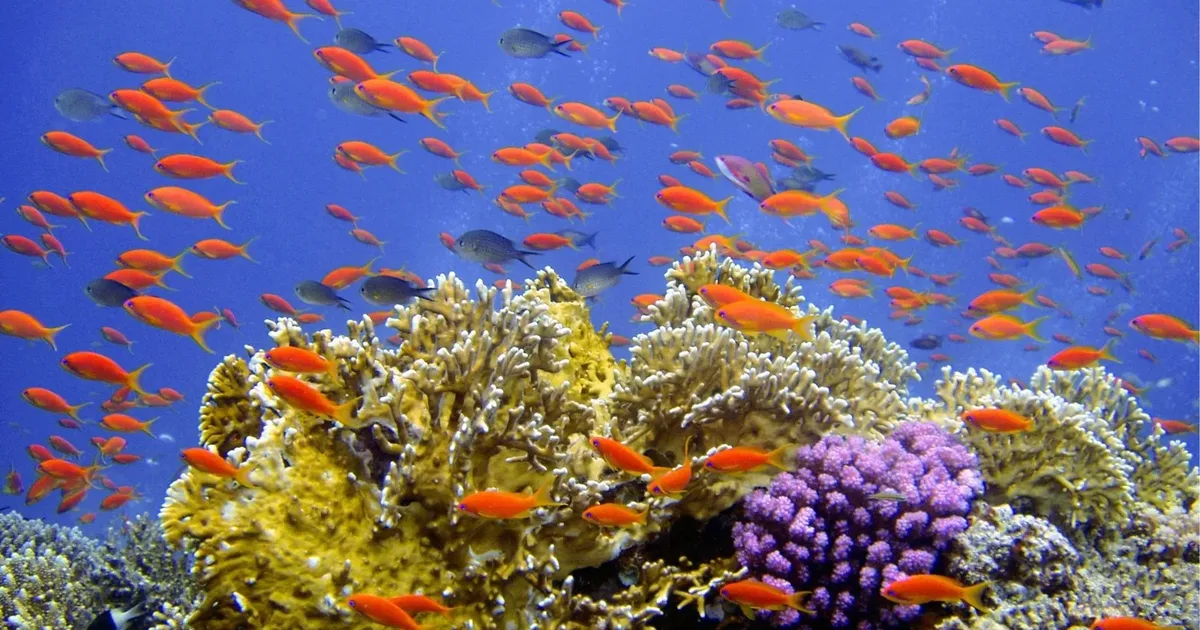
You do not need to scuba dive to see the animals people travel to Cairns for. On an ordinary snorkelling trip you can expect colourful reef fish, parrotfish, clownfish in their anemones and giant clams; green turtles and reef sharks are realistic sightings, though no one can promise them. Whales, mantas and dolphins depend much more on the season, the site and luck.
- Turtles: Green Island, Michaelmas Reef and outer reef sites
- Colourful reef fish: almost any healthy snorkelling site
- Reef sharks: the outer reef and deeper reef edges
- Dwarf minke whales: the Ribbon Reefs in June and July, on specialist trips
- Humpback whales: May to September
- Coral spawning: usually nights after the full moons of October to December
Check Availability
What marine life are you likely to see from Cairns?
On a normal snorkelling trip you may pass schools of butterflyfish and parrotfish, spot clownfish tucked into anemones, look down on giant clams glowing blue or green, and perhaps meet a green turtle resting beside the coral. Reef sharks and rays are realistic sightings too.
Don’t expect a checklist with guaranteed appearances. A reef tour is not an aquarium. A turtle may swim beside you for five minutes, or never appear. A reef shark may cruise under your group and vanish before half the boat notices. That unpredictability is part of what makes the reef interesting.
The Great Barrier Reef supports about 1,625 species of bony fish, more than 450 species of hard coral and 133 species of sharks and rays, and six of the world’s seven marine turtle species live in the region (Reef Authority).
| Marine life | How realistic on a Cairns reef trip? | Where to look |
|---|---|---|
| Colourful reef fish | Very likely | Almost any snorkelling reef |
| Clownfish / anemonefish | Common at suitable anemones | Shallow coral gardens |
| Parrotfish | Very likely | Reef flats and coral gardens |
| Butterflyfish / angelfish | Very likely | Coral-rich areas |
| Giant clams | Common at many reefs | Shallow coral gardens |
| Green turtles | Fairly common | Islands, cays and some outer reef sites |
| Reef sharks | Quite possible | The outer reef and deeper reef edges |
| Stingrays | Possible | Sandy patches beside the reef |
| Maori wrasse | Possible; familiar residents at some sites | Established outer reef tourism sites |
| Manta rays | Occasional | Offshore reefs and current lines |
| Dolphins | Possible but unpredictable | On the boat ride and in offshore waters |
| Humpback whales | Seasonal | May to September |
| Dwarf minke whales | Very seasonal and in one area | The Ribbon Reefs, mainly June and July |
| Whale sharks | A rare bonus | Most reports in November and December; don’t book a normal Cairns day trip expecting one |
Book for the reef, not for one animal.
If you also see a turtle, shark, ray or whale, count it as a bonus.
The All-Inclusive Half-Day Reef Snorkelling Trip from Cairns (from $147, 4.9/5 from 680+ reviews) is a good place to start if wildlife is your reason for going: a marine biologist guides you in the water and points out what you would swim past on your own (our breakdown).
Sea turtles: the encounter most Cairns visitors want
For many visitors the animal they most want to see isn’t a shark or a whale. It’s a turtle.
The good news is that green turtles are realistic sightings around Cairns. Six of the world’s seven marine turtle species live in the Great Barrier Reef region, and green and loggerhead turtles are among the ones you are more likely to meet (Reef Authority).
Green Island’s own visitor information says giant green turtles are often seen around the island, and Michaelmas Reef is also known for regular turtle encounters (Green Island).
Where are you most likely to see turtles?
Good places include:
- Green Island
- Michaelmas Reef and Michaelmas Cay
- outer reef snorkelling sites
- Fitzroy Island
- the Frankland Islands
- reef flats where turtles feed or rest
Michaelmas is particularly good because turtles use the area around the cay; regional tourism information describes them resting and foraging around the reef (Tropical North Queensland). The Michaelmas Cay and Great Barrier Reef Full-Day Snorkel (from $202, 4.7/5 from 160+ reviews) lands you on the cay.
Are turtle sightings guaranteed?
No. Even places with resident turtles cannot promise that one will appear while you are in the water.
If seeing one matters to you, ignore any tour that advertises guaranteed turtles. Choose instead:
- a site with regular turtle activity;
- plenty of time in the water;
- ideally a guided snorkel, where an experienced guide knows the likely resting and feeding spots.
How close can you get?
Let the turtle decide. Do not chase, touch, surround or block its path to the surface. Turtles need to breathe, and a relaxed animal behaving naturally makes a far better encounter than one trying to escape a crowd of snorkellers.
Reef sharks: more common, and less frightening, than many visitors expect
Seeing your first shark below you is one of the reef’s best surprises. Usually it isn’t frightening at all.
Small reef sharks are a normal part of the ecosystem and turn up at many reef sites. The reef region has 133 species of sharks and rays, from small reef sharks to huge migrating whale sharks (Reef Authority).
Green Island notes that reef sharks are fairly common around the island, and Michaelmas Reef is another site where you may meet them (Green Island).
What sharks might you see?
On ordinary Cairns snorkelling and diving trips, the sharks you are most likely to notice are reef species, not the huge predators of the films. Depending on the site and depth, you may see:
- blacktip reef sharks;
- whitetip reef sharks;
- grey reef sharks.
Divers usually have a better chance than snorkellers, because they can explore deeper reef edges and channels.
Are reef sharks dangerous?
On a reef tour you watch a wild animal from a respectful distance. Do not try to touch or follow one. Most snorkellers who meet a reef shark find it far less interested in them than they are in it.
Clownfish: yes, you can find Nemo
Clownfish are among the easiest reef animals for children, and adults, to recognise. They live with sea anemones and usually hover around the tentacles instead of swimming across the reef.
Green Island even has an introductory dive site known for clownfish and their anemones, along with turtles, other reef fish and the occasional reef shark (Green Island).
How do you find clownfish while snorkelling?
Don’t race across the reef looking for orange flashes. Instead:
- slow down;
- look into individual anemones;
- look closely around coral heads;
- follow your snorkel guide’s pointing.
A good guide often spots small animals long before you do, and that applies to far more than clownfish.
Parrotfish: one of the reef’s everyday stars
You are far more likely to come home talking about a huge turquoise parrotfish than about some rare creature on your wish list.
Parrotfish are easy to spot, often brightly coloured and surprisingly large. Watch closely and you may see them scraping algae off the coral with their beak-like teeth.
They show why a reef trip gets much more interesting once you stop thinking only about big animals. A coral garden full of:
- parrotfish;
- butterflyfish;
- damselfish;
- surgeonfish;
- wrasses;
- anthias;
can look more spectacular than a single turtle.
Butterflyfish and angelfish
These are the classic tropical fish you notice straight away. Butterflyfish are small, flat and brightly patterned, while angelfish come in striking mixes of yellow, blue, black and other colours.
Both suit snorkellers, because they spend much of their time around the coral near the surface.
If all you want is to see plenty of colourful tropical fish, you do not need a specialist wildlife trip. A good ordinary Cairns snorkelling day will do it; our guide to snorkelling the reef from Cairns compares the boats.
Maori wrasse: the fish you’ll remember
The humphead, or Maori, wrasse is one of the reef’s most charismatic fish. It can grow very large, and you can recognise it by:
- thick lips;
- blue-green colouring;
- intricate markings around the face;
- a pronounced bump on the forehead of mature fish.
The Reef Authority lists the Maori wrasse among its “Great 8” reef animals. It notes that some established tourism sites have familiar resident fish, partly because permitted fish feeding drew them to those spots in the past (Reef Authority).
Reef Magic’s Moore Reef pontoon, for example, makes a point of its resident giant Maori wrasse. On GetYourGuide that day is the Premium Five-Hour Outer Reef Pontoon Experience, from $228 and rated 4.7/5 from 200+ reviews.
Where might you see one?
Outer reef tourism sites with resident fish are your best bet. Still, don’t turn a wild animal into a promise: a Maori wrasse can move elsewhere whenever it likes.
Giant clams: much more impressive than the name sounds
Giant clams are one of the reef’s most underrated sights. From the surface they can look almost unreal, their mantles patterned in electric:
- blue;
- turquoise;
- green;
- purple;
- brown.
Part of the colour comes from microscopic algae living in their tissue.
The reef around Michaelmas Cay is known for giant clams, and snorkelling information for Tropical North Queensland regularly lists them among the animals you can see (Tropical North Queensland).
Because clams don’t swim away, they give new snorkellers time to stop and look.
Rays
Rays are easier to miss than turtles, because they often blend into the sand beside the coral. You may see stingrays and other ray species.
Michaelmas Reef, for example, is known for stingrays around coral heads and sandy patches (Tropical North Queensland).
A guide improves your odds a great deal. What looks like an oddly shaped patch of sand can suddenly lift its wings and glide away.
Manta rays: possible, but don’t book an ordinary day trip expecting one
Mantas are in a different category. They live on the Great Barrier Reef, and the Reef Authority counts them among the reef’s signature animals. They feed on plankton and small organisms gathered by the currents (Reef Authority).
Mantas have been recorded at Michaelmas Reef too (Tropical North Queensland).
On a standard Cairns day trip, though, treat a manta as a wonderful bonus, not an expected sighting. If mantas are what you want most, research the specific destination and season; don’t pick a general Cairns reef cruise because a manta appears in its photos.
Humpback whales: the seasonal bonus from May to September
Visit in winter and early spring and something much larger can appear on the boat ride.
Humpback whales are commonly sighted around Cairns during their annual migration, roughly from May to September (Reef Authority).
That doesn’t turn a reef cruise into a whale-watching tour. During the migration, though, crew and passengers keep an eye out for:
- blows;
- backs breaking the surface;
- tail flukes;
- the occasional breach.
A whale on the way to or from the reef is one of the best free extras a Cairns day trip can give you. The big outer reef boats, such as the Great Barrier Reef Cruise by Premium Catamaran (from $193, 4.8/5 from 3,950+ reviews), cross the open water where humpbacks pass.
Best months for humpbacks
A useful planning window is May, June, July, August and September, with the timing shifting a little each year.
Don’t choose a reef tour only because you expect a humpback, but do count one as a good seasonal bonus.
Dwarf minke whales: one of northern Queensland’s most unusual wildlife encounters
This is where the Cairns region is exceptional. Dwarf minke whales gather on the northern Great Barrier Reef, particularly the Ribbon Reefs, with most sightings in June and July (Reef Authority).
It is not the same as spotting a humpback from a day boat. Swimming with dwarf minkes is a specialist, tightly managed activity run by permitted operators (Reef Authority).
Can you see dwarf minkes on a normal Cairns day trip?
Possibly, by luck. If minkes are the reason you are travelling, don’t book an ordinary pontoon trip and hope.
Look at Ribbon Reef expeditions and liveaboards running in the June–July season, such as Spirit of Freedom’s minke whale trips or Mike Ball Dive Expeditions. They are booked directly with the operators, and they are a completely different product from a one-day Cairns snorkelling cruise. Our guide to liveaboards from Cairns compares the boats.
Dolphins
Dolphins live throughout the Great Barrier Reef region. You may spot them:
- on the way between Cairns and the reef;
- around the boat;
- offshore near the reefs;
- now and then while diving or snorkelling.
Sightings are unpredictable enough that you shouldn’t choose one reef operator over another because of its dolphin photos.
Unless a tour is built around a legally managed wildlife encounter, treat dolphins the way you treat whales: wonderful if they appear, not something your ticket buys.
Whale sharks: possible, but very lucky
Yes, whale sharks live on the Great Barrier Reef. No, Cairns is not Ningaloo, where people plan whole trips around them.
The Reef Authority reports more whale shark sightings in recent years. They turn up throughout the year, with activity often peaking in November and December, when corals and fish spawn (Reef Authority).
That makes the whale shark a real Great Barrier Reef animal. It does not make it one you should expect on a Cairns day cruise. If one appears, you’ve won the wildlife lottery.
Sea snakes
The Great Barrier Reef is a global hotspot for sea snakes, with 14 species (Reef Authority).
Divers are more likely than casual snorkellers to meet one. Some visitors feel instant alarm at the sight. The sensible response is simple: watch it, give it space and don’t touch it. The same rule applies to every animal on the reef, from a turtle, shark or snake to a tiny nudibranch.
Giant potato cod and large groupers
Large cod and groupers can be some of the most memorable animals on deeper dives.
The famous Cod Hole is much further north, on the Ribbon Reefs, and you reach it on specialist liveaboards, not on standard Cairns day cruises. The Cairns expeditions that go to the Ribbon Reefs sell close encounters with very large potato cod as a main attraction.
So if you see photos of enormous cod while planning a Cairns trip, check the itinerary. The photo may have been taken about 240 km north of the reefs a normal day boat visits.
Coral itself is wildlife
Many first-time visitors think of coral as colourful underwater rock. Corals are animals. A coral colony is made up of tiny animals called polyps, and the variety is enormous. You may see shapes like:
- branching antlers;
- dinner plates;
- huge boulders;
- mushrooms;
- delicate fans;
- flat tables.
The Great Barrier Reef has more than 450 species of hard coral (Reef Authority).
Many experienced reef visitors come to find healthy coral as interesting as the fish.
Coral spawning: the reef’s strangest seasonal spectacle
Once a year many reef-building corals spawn together, releasing huge numbers of egg-and-sperm bundles into the water, like an underwater snowstorm.
On the Great Barrier Reef, mass spawning usually happens one to six nights after the full moons of October, November or December, with timing differing by location. Inshore reefs may spawn earlier and outer reefs later (Reef Authority).
Can normal tourists see coral spawning?
Possibly, but most spawning happens at night. That makes it a job for:
- specialist night dives;
- liveaboards;
- dedicated spawning trips.
Exact dates can’t be guaranteed, because spawning depends on water temperature, the moon and local reef conditions (Reef Authority).
If you are travelling in November to see coral spawning, book an operator that runs spawning dives; a daytime reef cruise is unlikely to coincide with it. A liveaboard with night dives, such as the 2-Day Great Barrier Reef Dive and Snorkel Liveaboard (from $470, 4.6/5 from 110+ reviews), at least puts you on the reef after dark.
What can you see while snorkelling versus scuba diving?
You do not need to scuba dive to see turtles, sharks and colourful reef fish. Diving changes which habitats you can reach.
Snorkelling is particularly good for:
- reef fish;
- clownfish;
- giant clams;
- shallow coral gardens;
- turtles;
- some reef sharks;
- rays;
- bright coral in strong surface light.
Scuba diving adds access to:
- deeper reef walls;
- channels;
- larger coral structures;
- more shark encounters;
- large cod and groupers;
- animals sheltering under ledges;
- species that spend less time near the surface.
Deeper doesn’t automatically mean better. Some of the brightest coral and busiest fish life is shallow enough to see perfectly well with a snorkel. Our snorkelling vs scuba diving guide goes further.
Where should you go from Cairns for wildlife?
There isn’t one wildlife reef. Each destination gives you different encounters.
Green Island
Best for: turtles, colourful fish and easy wildlife viewing for beginners.
Green turtles are often seen, and reef sharks are possible (Green Island). Choose Green Island if you want shore snorkelling and wildlife without a full outer reef day; the Green Island cruise starts at $79 (4.4/5 from 2,010+ reviews).
Michaelmas Cay and Michaelmas Reef
Best for: turtles, giant clams, reef fish, birdlife, occasional rays and reef sharks.
Fringing reef with turtles and giant clams surrounds Michaelmas, and the cay itself is an important seabird sanctuary (Tropical North Queensland). If you want variety, it is one of the most interesting island or cay options; the Premium Great Barrier Reef & Coral Cay Cruise (from $195, 4.9/5 from 240+ reviews) adds Hastings Reef on the outer reef. Our guide to the Cairns reef islands and cays compares them.
Moore Reef
Best for: easy outer reef wildlife, families and mixed swimming abilities.
The pontoons give you several ways to look for marine life:
- snorkelling;
- snorkelling guided by a marine biologist;
- glass-bottom boat;
- semi-submersible;
- underwater observatory (Sunlover).
That helps when not everyone in your group wants to swim. The Outer Great Barrier Reef Pontoon Day with Activities is Sunlover’s Moore Reef day, from $200 and rated 4.5/5 from 400+ reviews.
Outer Reef boat trips
Best for: reef variety and confident snorkellers and divers.
Reef walls and offshore sites give you:
- schools of fish;
- reef sharks;
- deeper coral gardens;
- turtles;
- larger open-water fish.
What you see depends heavily on the reef you visit that day. The Outer Reef and Coral Cay Snorkel and Dive Cruise (from $203, 4.8/5 from 1,640+ reviews) and the Outer Great Barrier Reef Full-Day Tour with Lunch (from $193, 4.7/5 from 1,780+ reviews) both visit two outer reef sites; our outer reef guide covers the rest.
Ribbon Reefs
Best for: dwarf minke whales in June and July, and more specialist diving.
This is no longer a Cairns day trip. Think:
- liveaboards;
- several days;
- more remote reef;
- specialist wildlife encounters.
Which Cairns reef trip gives you the best chance of seeing turtles?
Shortlist:
Green Island if you want the easiest trip.
Michaelmas Reef if you want turtle habitat together with more reef-focused snorkelling.
Outer reef trips if you want a wider range of wildlife instead of chasing one species.
Don’t rank tours only by your odds of a turtle, though, because animals move. A better question is: which trip would I still enjoy if I didn’t see a turtle? That is usually the right tour.
Which trip is best for reef sharks?
For reef sharks, an outer reef trip usually beats a beach-focused island day, because deeper reef edges and channels give you more chances.
Michaelmas Reef is one place where reef sharks are regularly recorded, along with rays, turtles and larger fish (Tropical North Queensland).
Divers have the edge here because they spend more time at depth.
Which trip is best for children who want to see fish?
A pontoon can be excellent. At Moore Reef, children can see marine life by:
- snorkelling;
- taking a glass-bottom boat;
- riding the semi-submersible;
- visiting the underwater observatory;
- watching fish presentations.
Sunlover spends about four hours at Moore Reef, which gives families several ways to see the same reef (Sunlover). Our pontoon tours guide compares the platforms.
Green Island is another strong option, because children can move between the beach, snorkelling and dry activities.
Do you see more wildlife at the Outer Reef than Green Island?
Not automatically. You may see different wildlife.
Green Island can be very good for turtles and fish in shallow water. Outer reef sites have deeper habitat and may give you better chances of:
- reef sharks;
- large schools of fish;
- big wrasse;
- larger open-water fish.
But wildlife never follows a booking-page ranking. A turtle in a metre of water at Green Island can easily be the wildlife highlight of your whole Cairns trip.
Does morning or afternoon matter?
Not enough to choose a reef tour by the time of day. For most visitors these matter more:
- the reef you visit;
- the weather;
- the wind;
- the tide;
- water visibility;
- how much time you spend in the water;
- whether you have a guide.
Animals do have daily patterns, but on a one-day trip you can’t reliably plan around them.
Does tide affect wildlife viewing?
Yes, particularly at shallow island reefs. The tide changes:
- the water depth;
- access to reef flats;
- currents;
- visibility in some areas;
- where fish can feed.
At very low tide some shallow areas become hard or impossible to snorkel. That is another reason a guided snorkel can pay off: the crew know where conditions are best at that moment, not just where the map shows reef.
Does bad weather mean you won’t see anything?
Not necessarily. Cloud does not make the fish disappear, and rain doesn’t automatically spoil snorkelling.
Wind and sea state matter more, because they affect:
- how comfortable the boat ride is;
- surface chop;
- visibility;
- which sites the operator can safely use.
A sunny day brings out the colour and helps your photos, but some excellent encounters happen under very ordinary skies.
What marine life can non-swimmers see?
Quite a lot. On a pontoon or island trip with ways to view the reef dry, you can see:
- tropical fish;
- coral;
- giant clams;
- turtles;
- rays;
- the occasional shark.
Look for:
- a glass-bottom boat;
- a semi-submersible;
- an underwater observatory.
Sunlover’s Moore Reef pontoon has all three, and Michaelmas Cay cruises also use semi-submersibles (Sunlover). You don’t have to swim to have a real Great Barrier Reef experience; our guide for non-swimmers has the details.
When should you visit for particular wildlife?
| Wildlife or event | Best general timing |
|---|---|
| Colourful reef fish | All year |
| Green turtles | All year |
| Reef sharks | All year |
| Giant clams | All year |
| Maori wrasse | All year |
| Humpback whales | May to September |
| Dwarf minke whales | Mainly June and July |
| Whale sharks | Possible all year; sightings tend to peak in November and December |
| Coral spawning | Usually nights after the full moons of October to December |
The key distinction is between resident reef life and migrating wildlife. Don’t put off a March trip because someone told you July has whales if what you want is coral, turtles and reef fish; those are there all year. Our guide to the best time to visit the reef covers the weather month by month.
What you probably will not see
It helps to set expectations before you book.
Great white sharks
Not something a normal Cairns reef visitor should expect. Photos and documentaries can make every shark seem interchangeable, but they are not. The sharks you will realistically see are reef species.
Dugongs
Dugongs live in the wider Great Barrier Reef region, especially where there is seagrass, but they are not a routine outer reef snorkelling sighting.
The Reef Authority notes that dugongs and turtles are often linked with inshore seagrass, including areas further north between Port Douglas and Cape Tribulation (Reef Authority). If a dugong is your only goal, an ordinary Cairns reef cruise is the wrong product to count on.
Whale sharks
Possible, yes. Expected, no.
Manta rays
Possible, and still a bonus.
The biggest mistake: choosing from wildlife photos
Tour listings and operator websites naturally show the best animals seen over years of trips. That doesn’t mean your Tuesday in October will bring a turtle, a shark, a manta, a whale and a giant Maori wrasse.
When you compare tours, look at the habitat and the format of the day, not the hero photo. Ask:
- Is this an island or an outer reef site?
- How long will I actually snorkel?
- Is guided snorkelling available?
- Does the boat visit one reef or several?
- Can I dive?
- Is the site shallow or deep?
- Is the operator targeting a seasonal species?
Those answers tell you far more than a gallery.
Is a marine-biologist-guided snorkel worth paying for?
For wildlife lovers, often yes. Guides can’t summon animals, but they see things you don’t. A marine biologist or experienced reef guide may point out:
- camouflaged rays;
- tiny nudibranchs;
- juvenile fish;
- cleaning stations;
- coral structures;
- feeding behaviour;
- anemones you would have swum past;
- the differences between coral species.
It is one of the few tour extras that can change how much you notice underwater.
Moore Reef, Michaelmas Cay and many other Cairns trips offer guided snorkelling (Sunlover). The half-day snorkel trip with a marine biologist builds the whole morning around it.
Snorkelling tips for seeing more wildlife
The snorkellers who see the most are rarely the fastest.
Swim slowly
Speed makes you miss small animals and can frighten larger ones.
Look under coral edges
Fish shelter in the reef. Don’t put your hands under ledges; just look.
Scan the sand
That’s where rays hide.
Look away from the reef now and then
A turtle, shark or school of fish may be passing behind you in open water.
Follow your guide
Experienced guides know the habitat. They are often looking for an animal before you realise there is anything to find.
Don’t chase
Chasing gives you worse encounters and worse photos. Let the animal behave normally.
How to photograph marine life without ruining the encounter
A few practical rules make a big difference:
- move in slowly instead of swimming hard;
- don’t hold on to coral to steady yourself;
- don’t block turtles from surfacing;
- don’t surround animals;
- avoid flash where it is banned or unsuitable;
- keep your fins away from the coral;
- don’t trade the moment for 200 shaky videos.
The best underwater photo may be the one you don’t force.
Responsible wildlife encounters
The Great Barrier Reef is not just an attraction; it is a living, protected ecosystem. The basic rules are straightforward:
- never stand on coral;
- don’t collect shells, coral or animals;
- don’t feed wildlife unless an authorised tourism activity allows it;
- don’t chase turtles, rays or sharks;
- keep your distance from whales and dolphins;
- follow the crew’s wildlife instructions.
The Cairns area has specific rules for protected species including whales, dolphins, turtles and dugongs (Reef Authority).
Our verdict: what will you really see?
A realistic first snorkel on the reef from Cairns looks less like a documentary highlight reel and more like this.
You put your face in the water. At first you notice the coral. Then you realise the coral is full of fish. A parrotfish crosses beneath you. Tiny damselfish hover over branching coral. A pair of butterflyfish drifts past. Your guide points at an anemone and suddenly you see the clownfish that was there all along.
Ten minutes later someone waves frantically. A turtle is moving along the reef. Or perhaps it isn’t, and instead you see a reef shark cruising beyond the coral edge, or a ray almost buried in the sand. That’s how reef wildlife works.
You can reasonably expect colourful fish and coral. Turtles and reef sharks are realistic possibilities. Rays and Maori wrasse depend more on the site. Mantas, dolphins and whales are bonuses. Dwarf minkes need specialist seasonal planning, and whale sharks are a lottery ticket.
If you want to see an ecosystem full of life, Cairns is an excellent place to start. If you are after one particular animal, choose your site, season and type of trip much more carefully.
Frequently asked questions
What animals will I see on the Great Barrier Reef from Cairns?
Most visitors can expect colourful reef fish and coral, with giant clams common at many sites. Turtles and reef sharks are realistic but not guaranteed. Rays and large Maori wrasse are possible depending on the reef. Whales, dolphins, mantas and whale sharks are less predictable.
Are there turtles on the Great Barrier Reef near Cairns?
Yes. Green turtles live throughout the Cairns reef region and are often seen at places including Green Island and Michaelmas Reef (Green Island).
Will I see sharks while snorkelling?
You might. Reef sharks live at many Cairns reef sites and are a normal part of the ecosystem. Outer reef sites and deeper reef edges give you good chances, but no normal tour can guarantee a sighting.
Are sharks on the Great Barrier Reef dangerous?
The sharks you meet on reef tours are generally reef species that keep their distance from snorkellers. Follow your guide’s instructions and never try to touch or chase wildlife.
Can you see Nemo from Cairns?
Yes. Clownfish live among anemones at reef sites you can reach from Cairns. Green Island even has an introductory dive site known for clownfish and anemones (Green Island).
Can you see whales from Cairns?
Yes, in season. Humpback whales are commonly sighted during their migration from roughly May to September. Dwarf minke whales are found mainly on the northern Ribbon Reefs in June and July (Reef Authority).
Can you swim with dwarf minke whales?
Yes, with permitted specialist operators who run carefully managed dwarf minke encounters, mainly on the Ribbon Reefs in June and July. It is a specialist trip, not a standard Cairns pontoon day (Reef Authority).
Can you see whale sharks from Cairns?
It is possible but unusual. The Reef Authority reports whale shark sightings across the Great Barrier Reef, often peaking around November and December, but don’t expect one on a Cairns day tour (Reef Authority).
When is coral spawning on the Great Barrier Reef?
Mass coral spawning usually happens one to six nights after the full moons of October, November and December, with the exact timing depending on the location and conditions (Reef Authority).
Can non-swimmers see marine life?
Yes. Choose a pontoon or reef trip with a glass-bottom boat, semi-submersible or underwater observatory. Moore Reef has several ways to view the reef dry (Sunlover).
Is scuba diving better than snorkelling for wildlife?
Diving takes you to deeper habitat and can improve your chances of larger reef fish and sharks. Snorkellers still see turtles, clownfish, giant clams, reef sharks and huge numbers of tropical fish, and for many first-time visitors snorkelling is plenty. Our guide to diving the reef from Cairns covers the dive boats.
Related reading
- Great Barrier Reef snorkelling from Cairns
- Scuba diving the Great Barrier Reef from Cairns
- Best places to snorkel the reef from Cairns
- The outer Great Barrier Reef from Cairns
- Is Green Island worth visiting?
- Best Great Barrier Reef islands and cays from Cairns
- Great Barrier Reef liveaboards from Cairns
- Best time to visit the reef from Cairns
- Snorkelling vs scuba diving on the reef
- Which reef tour from Cairns is right for you?
Want a guide who knows where to look? Check availability on the marine-biologist snorkel trip for your dates.
Two Outer Reef Sites, One Day on a Catamaran
Snorkelling gear and a guided snorkel tour, a chef-prepared lunch, morning and afternoon tea, and a marine life talk on board. Rated by more than 3,800 guests, with free cancellation.
Check Availability & Book