Outer Reef vs Green Island: Which Great Barrier Reef Trip Is Better?
Green Island or the outer reef from Cairns? Snorkelling, coral, beaches, families, non-swimmers, seasickness, travel time and cost compared, plus the day that does both.
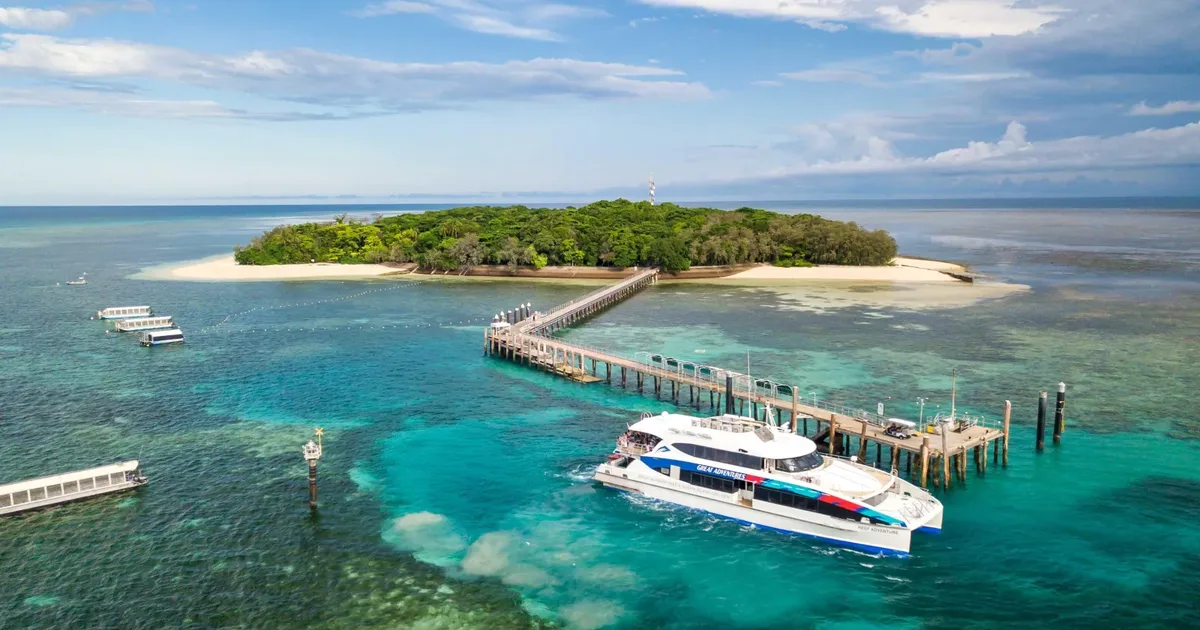
Choose the outer reef if the best coral, snorkelling and underwater scenery you can get is the main reason you are visiting Cairns. Choose Green Island if you want a shorter boat ride and a relaxed tropical-island day with a beach, rainforest, swimming and some reef time. In short: go to the outer reef for the reef, and go to Green Island for the island.
For most first-time visitors with only one day for the Great Barrier Reef, we would choose the outer reef, because it usually gives you more time devoted to the reef and puts the underwater part at the centre of the day. Green Island is the better all-rounder: you can snorkel, but you can also walk through rainforest, sit on the beach, have lunch on land or spend an hour under a palm tree, which suits families and groups where not everyone wants to snorkel for hours. And if you really can’t choose, there is a third option: the Green Island and Moore Reef combo gives you about two hours on the island and about three hours at an outer reef platform in one day.
- Best for the reef itself, and for serious snorkelling: the outer reef
- Best for a beach as well as reef: Green Island
- Best for a shorter boat journey: Green Island
- Best for non-swimmers who want to see coral: an outer reef pontoon
- Best for a relaxed island day: Green Island
- Can’t decide? A Green Island and outer reef combination
Check Availability
Outer reef vs Green Island at a glance
| Outer reef | Green Island | |
|---|---|---|
| Best for | Coral, snorkelling, diving | Beach, reef and rainforest |
| Reef experience | The main event | Part of the day |
| Snorkelling | Usually better | Good, but more variable |
| Diving | An excellent choice | Available, but not the reason to go |
| Beach | Usually none | Yes |
| Rainforest and walks | No | Yes |
| Non-swimmers | Excellent on pontoon tours | Very good |
| Families | Excellent on pontoons | Excellent |
| Boat journey | About 90 minutes each way on most trips | About 45 to 50 minutes |
| Time on location | Often 3 to 5 hours | Up to about 7 hours, depending on the ferry |
| Glass-bottom boat | Common on pontoons | Yes |
| Semi-submersible | Common on the big pontoons | Not the main Green Island experience |
| Underwater observatory | On some pontoons | No large pontoon setup |
| If you get seasick | Less ideal | The better choice |
| Scenery above water | Open ocean and reef | A tropical island |
| Our pick for one reef day | The outer reef |
Travel times and inclusions depend on the operator. Green Island is 27 km off Cairns and the ferries take about 45 to 50 minutes, while the big Cairns outer reef boats quote about 90 minutes to their pontoons and reef sites.
So, is the outer reef or Green Island better?
For the strongest Great Barrier Reef experience, we would pick the outer reef. The Great Barrier Reef isn’t one attraction with a single entrance: from Cairns you can visit coral cays, islands and reefs at different distances offshore, and the Marine Park’s own planning for the Cairns area covers both its cays and islands and the reefs out at the edge.
An outer reef tour takes you further offshore to spend the day at coral reef sites. Green Island is different: Queensland Parks describes it as a true 12-hectare coral cay, covered in tropical forest and surrounded by its own reef.
That difference shapes almost everything about the day. On the outer reef, the reef is the destination; on Green Island, the island is part of the destination. Neither is a bad choice, but they suit quite different visitors.
Choose the outer reef if…
The outer reef is probably right for you if:
- this may be your only chance to see the Great Barrier Reef
- snorkelling is the main reason you are going
- you want to scuba dive
- you want several hours focused almost entirely on the reef
- you want a guided snorkel
- your group has both swimmers and non-swimmers
- you like the idea of a large pontoon with easy water entry
- you want semi-submersibles, underwater viewing and similar activities
- you don’t mind a longer boat ride
The big Cairns pontoons make the outer reef much easier than the words “outer reef” suggest. Reef Magic’s five-hour pontoon day spends about five hours at its Moore Reef pontoon, from $228 and rated 4.7 from more than 180 reviews, while the Sunlover Moore Reef pontoon gives you about four hours at the reef, from $200 and rated 4.5 from more than 400 reviews. Both let you see the reef without spending the whole day swimming. Our pontoon tours page compares every platform day.
Choose Green Island if…
Green Island makes more sense if:
- you want a tropical beach as much as you want coral
- you have small children who may not want to snorkel for long
- someone in your group isn’t bothered about the reef
- you want to wander and explore on your own
- you prefer solid ground to a boat or pontoon
- you are worried about seasickness
- you want a shorter trip from Cairns
- you want a slower, looser day
- you would enjoy mixing swimming with lunch, beach time and rainforest
Green Island sits 27 km off Cairns, and Queensland Parks calls it one of the most accessible islands on the Great Barrier Reef. It has a sandy beach, shallow water, walking tracks, toilets and showers, and boardwalks you can push a wheelchair or a stroller along. Take Great Adventures’ first boat out and its last boat back and you get up to seven hours on the island. Our Green Island tours page compares the ferries.
Which has better snorkelling?
Usually the outer reef. If you are booking mainly to snorkel, we would normally choose the outer reef.
That doesn’t mean Green Island’s snorkelling is poor. Its reef is home to corals, giant clams, fish and stingrays, and green and hawksbill turtles may be seen offshore. In a Reef Authority rehabilitation trial on a tennis-court-sized patch of rubble off the island, coral cover reached up to an estimated 80 per cent in six years, a preliminary figure for that one site.
The difference is the kind of experience. At Green Island you usually walk in from the beach and explore a fringing reef, and what you see depends on the tide, the wind, the visibility and exactly where you swim. On the outer reef you have travelled to a site chosen for reef tourism. On pontoon trips you step straight from the platform into a marked snorkelling area, usually with flotation gear, lifeguards watching and optional guided snorkelling. Reef Magic, for example, puts its Moore Reef pontoon about 45 km east of Cairns, with depths around the site from about 1 to 25 metres.
If snorkelling is your top priority, book the outer reef. If you want to snorkel for an hour or two and then spend the afternoon on a beach, book Green Island. Our snorkelling guide covers both in more detail.
Which has better coral?
Usually the outer reef, though no one can honestly promise that one reef will always look better than another. Coral changes from site to site and over time, with storms, marine heatwaves, bleaching, recovery and local conditions, so it’s better to think in odds than guarantees.
If your main goal is “take me somewhere chosen mainly for its coral and underwater scenery”, an outer reef tour is generally the better bet. Green Island is still real Great Barrier Reef habitat, not a theme park beside the reef, but you choose it partly for everything above the water too.
Is Green Island part of the Great Barrier Reef?
Yes, and the question comes up often. Green Island, known to the Gunggandji people as Wunyami, is a coral cay inside the Great Barrier Reef World Heritage Area. It built up over thousands of years from sand and coral rubble on the sheltered side of a platform reef, and it is covered in tropical vine forest and surrounded by reef.
So you are visiting the Great Barrier Reef when you visit Green Island. The question isn’t “the real reef or Green Island?” but “an island reef day or a dedicated offshore reef day?”, and that is a much more useful way to choose. Our guide on whether Green Island is worth visiting goes into the island itself.
Which is better for scuba diving?
The outer reef, easily, especially for certified divers who want their Cairns day built around time underwater instead of time on a beach. Outer reef tours commonly offer:
- introductory dives for people without a certificate
- certified dives
- guided diving
- snorkel and dive combinations
- deeper reef
- several underwater activities
Not every tour includes diving in the fare, so check whether it is an optional extra. If you are a serious diver, consider whether a dedicated dive boat suits you better than a family pontoon: a pontoon wins on versatility, and a dive-focused boat can be better if nearly everyone in your group wants maximum time underwater. Our scuba diving guide and diving trips page go through the options.
Which is better for non-swimmers?
An outer reef pontoon, by a small margin. That may sound odd, since a tropical island seems the obvious choice for someone who can’t swim. But a large outer reef pontoon is one of the easiest ways to see coral without getting in the water at all. Depending on the operator, you get:
- a glass-bottom boat
- a semi-submersible
- an underwater observatory
- marine biologist presentations
- fish feeding
- helicopter flights at extra cost
- shaded seating and sun decks
Reef Magic includes a glass-bottom boat, a semi-submersible and its underwater observatory in the fare, and Sunlover’s Moore Reef pontoon has the same three.
Green Island also works well for non-swimmers, because you can walk, sit on the beach, explore the rainforest and take a glass-bottom boat. The Great Adventures snorkel or glass-bottom boat day starts at $109, rated 4.4 from more than 140 reviews.
Our rule: if you want to experience the reef without swimming, choose an outer reef pontoon; if you want a pleasant day even if you barely touch the reef, choose Green Island. Our guide for non-swimmers has more.
Which is better for children?
It depends on the child. Both can be excellent.
Green Island is especially good for:
- toddlers and very young children
- children who want a beach
- families who need flexibility
- children unlikely to snorkel for long
- anyone who needs a break from organised activities
There is simply more freedom on land.
An outer reef pontoon is especially good for:
- school-age children excited about fish and coral
- beginner snorkellers
- families with swimmers and non-swimmers
- children who would love a semi-submersible or glass-bottom boat
- families who want everything in one place
Sunlover’s Moore Reef pontoon, for example, has a 30-metre waterslide alongside its reef-viewing activities. For many families with children aged about five and up, a pontoon can be the more entertaining reef day.
What about seasickness?
Green Island. If you know you suffer badly from motion sickness, take Green Island seriously. The crossing is about 45 minutes, and Great Adventures advises travellers worried about motion sickness that it is shorter and more sheltered than the run to the outer reef. Outer reef crossings usually take about 90 minutes each way, into more exposed water.
That doesn’t mean you will be sick on an outer reef boat, because the big catamarans are large, stable vessels, but the sea can get bumpy. If you are prone to seasickness:
- take your usual medication early enough for it to work
- eat lightly before you leave
- sit outside where you can see the horizon
- don’t read your phone on the crossing
- ask the crew where the most stable seats are
If seasickness has ruined boat trips for you before, Green Island may be the safer choice. Our guide to how far the reef is from Cairns sets out every crossing time.
Which has the better beach?
Green Island, by a very wide margin. It isn’t a contest. Green Island gives you a real tropical island beach, and Queensland Parks lists swimming, sunbathing and shallow-water snorkelling from the beach among the main things to do there. A typical outer reef trip has no beach at all: you are on a boat or a floating platform surrounded by open water and reef.
If your picture of a Queensland day is snorkel, beach, lunch, walk, swim, palm trees, snorkel again, choose Green Island. If it is boat, coral, snorkel, dive, semi-submersible, more coral, choose the outer reef.
Which is more beautiful above the water?
This one is subjective, but we would give it to Green Island. The outer reef can look extraordinary from the air, with patches of turquoise, deep blue water and coral spread out below, but at eye level you mostly see ocean.
Green Island gives you the classic tropical-island mix:
- white sand
- turquoise water
- rainforest
- palms and coastal plants
- birds
- reef flats
- a view from the horizon to the beach
There is a boardwalk through the forest in the middle of the island and a beach walk around the cay. For photographers who want island scenery as well as underwater shots, Green Island has the edge.
Which is better in bad weather?
There’s no simple winner. Rain on its own isn’t a disaster, because you get wet snorkelling anyway. What matters more is the wind, the waves, the visibility, the cloud and the state of the sea.
Green Island gives you more to do on land if you’d rather get out of the water. A large outer reef pontoon, though, has more structured alternatives if the snorkelling doesn’t appeal: semi-submersibles, an underwater observatory, glass-bottom boats and covered areas. Operators change or cancel activities when the sea makes them unsafe.
Don’t judge tomorrow’s reef trip from the Cairns weather icon alone; it can be very different offshore. Our best time to visit guide goes through the seasons.
Marine life: Green Island vs the outer reef
You can see impressive marine life at either. Around Green Island, Queensland Parks lists reef fish, giant clams, stingrays, seabirds, and green and hawksbill turtles offshore.
At outer reef sites you may see:
- parrotfish
- butterflyfish
- angelfish
- clownfish
- giant clams
- sea turtles
- rays
- reef sharks
- schools of tropical fish
- large wrasse
But wildlife is wild, and you should never choose a tour because someone promises a turtle, a shark or a particular fish. The better question is where you will have the most chances to look, and for dedicated snorkellers that is normally the outer reef.
Cost: Green Island vs the outer reef
Green Island is usually the cheaper option. Great Adventures’ own adult fares for 1 April 2026 to 31 March 2027, in Australian dollars, show the gap:
| Great Adventures experience | Adult fare (AUD) |
|---|---|
| Green Island transfer | A$112 |
| Green Island Eco Tour | A$127 |
| Green Island Discovery Tour | A$156 |
| Great Barrier Reef Adventure (outer reef) | A$312 |
| Green Island and Great Barrier Reef Adventure | A$343 |
Its outer reef days also carry a A$10 adult fuel surcharge. Reef Magic lists its Moore Reef day from A$325 for an adult, off-peak.
On GetYourGuide, in US dollars, the Green Island days start at $77 to $79, the Great Adventures Moore Reef day at $199, the Green Island and Moore Reef combo at $219 and Reef Magic’s pontoon day at $228.
So if budget matters a lot, Green Island gets you onto the Great Barrier Reef for much less. We still wouldn’t choose on price alone: paying more for the outer reef makes sense if snorkelling the Great Barrier Reef is the thing you came to Australia to do.
What a Green Island day looks like
Flexibility is one of Green Island’s biggest advantages. Great Adventures runs morning departures from Cairns and afternoon returns, so you can do anything from a short visit to almost a full day on the island. A relaxed day might go:
- 8:30am: ferry from Cairns
- 9:15am: arrive on Green Island
- 9:30am: snorkel
- 11am: beach time
- 12pm: lunch
- 1pm: rainforest boardwalk
- 2pm: glass-bottom boat or another swim
- 4:30pm: return ferry
- 5:15pm: back in Cairns
You don’t need to follow it, and that is the appeal: it feels more like a day on an island than a reef excursion. The Great Adventures Green Island cruise starts at $79, rated 4.4 from more than 1,900 reviews, and the Big Cat full-day Green Island cruise at $77, rated 4.5 from more than 1,700 reviews.
What an outer reef day looks like
Outer reef trips are more structured. A Reef Magic day runs roughly:
- 9am: leave Cairns
- 10:30am: arrive at Moore Reef
- 10:30am to 3:30pm: time at the reef
- 3:30pm: leave the reef
- 5pm: back in Cairns
That is about five hours at the pontoon. In that time you might take the glass-bottom boat, snorkel, have lunch, snorkel again, join a guided tour, visit the underwater observatory, try an introductory dive, and sit on the deck wondering why you didn’t bring an underwater camera. That concentrated reef time is why we favour the outer reef for a once-only visit.
What is an outer reef pontoon?
Think of a large floating base moored beside a reef. Instead of climbing on and off a small boat, you arrive at the platform and spend several hours there. Typical facilities include:
- snorkelling platforms
- steps into the water
- flotation equipment
- showers
- toilets
- shaded seating
- a buffet lunch
- underwater viewing
- glass-bottom boats
- semi-submersibles
- dive facilities
For beginners, families and mixed-ability groups, a pontoon makes the outer reef surprisingly easy.
Pontoon or outer reef boat?
This is another decision hidden inside the Green Island question, because not every outer reef trip uses a pontoon.
Choose a pontoon if you want:
- stability
- plenty of facilities
- easy water entry
- activities for non-swimmers
- plenty for children to do
- diving and snorkelling in one group
- somewhere to retreat to between swims
Choose a smaller reef boat if you want:
- more emphasis on snorkelling or diving
- several reef sites
- fewer passengers
- less infrastructure
- a more adventurous feel
Neither is more authentic. For a strong swimmer, several reef sites on a snorkelling boat such as the Passions of Paradise catamaran can be fantastic. For a nervous first-time snorkeller travelling with two children and a grandparent who doesn’t swim, a pontoon is almost certainly more useful. Our comparison of the best reef tours from Cairns ranks the boats and pontoons operator by operator.
Which is better for a honeymoon or a couple?
It depends on your idea of romance. Green Island is better for strolling along a beach, lingering over lunch, relaxing together, island photographs and doing very little. The outer reef is better for sharing a bucket-list experience, snorkelling or diving together, marine life and underwater photography.
For an active couple who came to Australia mainly for the reef, we would choose the outer reef. For a couple who want a tropical escape with some reef added, Green Island may feel more special. The Ocean Free sailing day, with no more than 25 guests, a reef mooring and time on Green Island, sits in between, from $203 and rated 4.8 from more than 400 reviews.
Which is better for older travellers?
Don’t assume Green Island. If someone moves well but doesn’t swim, an outer reef pontoon can be excellent, because they can see the reef from the dry activities.
Green Island has real accessibility advantages too: Queensland Parks says the boardwalks and tracks in the national park and the resort area are accessible to wheelchairs and strollers, and there are toilets and showers in the day-use area. Some help may still be needed in places. On outer reef cruises, access varies a lot between boats and pontoons. If someone uses a wheelchair or has limited mobility, ask the operator about:
- gangway width
- stairs
- accessible toilets
- wheelchair transfers
- access to the pontoon
- boarding the glass-bottom boat
- getting into the water
Ask before booking, not at check-in.
What about stinger season?
Tropical North Queensland has a marine stinger season in the warmer months, broadly from about November to May, though timing varies and local advice comes first. It doesn’t stop reef tours: operators keep snorkelling and diving with Lycra stinger suits and safety procedures. Follow the crew’s instructions instead of trying to judge from an online calendar whether the water is safe.
If you only have half a day
Green Island becomes more attractive, because you can reach it quickly enough to fit into a short stay. The outer reef is usually a full-day commitment because of the distance, although the half-day reef tours from Cairns do reach outer reef sites in a morning.
If you have one full day, though, reverse that logic and use it for the outer reef. You can find beaches elsewhere around Cairns; you can’t find the outer Great Barrier Reef anywhere else.
The compromise: Green Island and the outer reef in one day
For travellers who really want both, we like the Green Island and Moore Reef combo (our breakdown). Great Adventures gives you roughly:
- about two hours on Green Island, with snorkel gear
- about three hours at its Moore Reef activity platform
- snorkelling at both
- a semi-submersible tour
- the underwater observatory
- a buffet lunch with prawns
- a marine biologist’s reef presentation and fish feeding
It starts at $219, rated 4.6 from 98 reviews.
You don’t leave Cairns wondering whether you picked the wrong one: you see the beach and the rainforest and still reach the outer reef. The downside is less time at each. Two hours goes quickly on Green Island, and three hours at a platform can feel short if you want to snorkel, dive, eat and try every included activity.
We’d recommend the combination mainly to first-time visitors, people with only one free day, couples who want different things, and travellers who value variety over depth. If you are passionate about snorkelling, spend the whole day at the outer reef instead.
Outer reef vs Green Island by traveller
- First visit to the Great Barrier Reef: the outer reef, unless the longer crossing is a real worry.
- Serious snorkeller: the outer reef. An easy decision.
- Certified diver: the outer reef, ideally on a trip built around diving.
- First-time snorkeller: an outer reef pontoon. Good facilities and easy access make it less intimidating.
- Non-swimmer: an outer reef pontoon, especially one with a semi-submersible and underwater viewing included.
- Young family: Green Island or a family pontoon. Green Island for flexibility, a pontoon for organised activities.
- Beach lover: Green Island. No contest.
- Rainforest lover: Green Island, the only one of the two with island forest.
- Poor sailor: Green Island, for the shorter crossing.
- Photographer: Green Island for landscapes; the outer reef for underwater shots and, from the air, the reef patterns.
- One day in Cairns: the outer reef. Make the reef the event.
- Two days in Cairns: do both, on separate days, if the budget allows.
The final verdict
Choose Green Island if your ideal day is beach, swimming, rainforest, lunch and a little snorkelling. Choose the outer reef if it is coral, fish, snorkelling, diving and as much time underwater as possible.
And if someone asked us, “I’m coming all the way to Cairns and can only book one Great Barrier Reef trip. Which would you choose?”, we would book the outer reef. Green Island is lovely because it gives you several experiences in one day, but the outer reef is where we’d go when the reef itself is the reason for the trip.
Frequently asked questions
Is Green Island or the outer reef better for snorkelling?
The outer reef is usually better for dedicated snorkelling, because the boats travel to offshore reef sites and give you several hours of reef activities. Green Island is better if you want to combine snorkelling with a beach and an island day.
Is the outer reef worth the longer boat ride?
For most people whose priority is coral, marine life or snorkelling, yes. Most Cairns outer reef trips take about 90 minutes each way and spend three to five hours at the reef. Our guide to the outer Great Barrier Reef from Cairns asks whether the outer reef is worth it for your group.
Is Green Island part of the Great Barrier Reef?
Yes. Green Island is a 12-hectare coral cay surrounded by reef, inside the Great Barrier Reef World Heritage Area, 27 km off Cairns.
How long is the ferry from Cairns to Green Island?
About 45 to 50 minutes, depending on the boat and the sea.
How long does it take to get from Cairns to the outer reef?
Most fast Cairns catamarans take about 90 minutes, although times vary by operator and reef.
Can non-swimmers visit the outer reef?
Yes. Choose a pontoon with a glass-bottom boat, a semi-submersible and an underwater observatory, and you can see the reef without snorkelling.
Is Green Island better if you get seasick?
Generally, yes. It is closer to Cairns, the crossing is shorter and more sheltered, and Great Adventures suggests it for travellers worried about motion sickness.
Can you visit Green Island and the outer reef on the same day?
Yes. Great Adventures runs a combination day with about two hours on Green Island and about three hours at its Moore Reef platform.
Should I visit Green Island or Fitzroy Island instead?
They are different islands. Green Island is a small, flat coral cay surrounded by reef, while Fitzroy is a larger continental island with rainforest, walking tracks and beaches. Our Fitzroy Island tours page covers the ferries there.
Want the outer reef with the easiest way in? Check availability on Reef Magic’s five-hour pontoon day.
Two Outer Reef Sites, One Day on a Catamaran
Snorkelling gear and a guided snorkel tour, a chef-prepared lunch, morning and afternoon tea, and a marine life talk on board. Rated by more than 3,800 guests, with free cancellation.
Check Availability & Book