Scuba Diving the Great Barrier Reef from Cairns: A Complete Guide
Introductory dives, certified day boats, liveaboards and courses from Cairns: what each involves, the reefs, medical rules, flying after diving and what it costs.
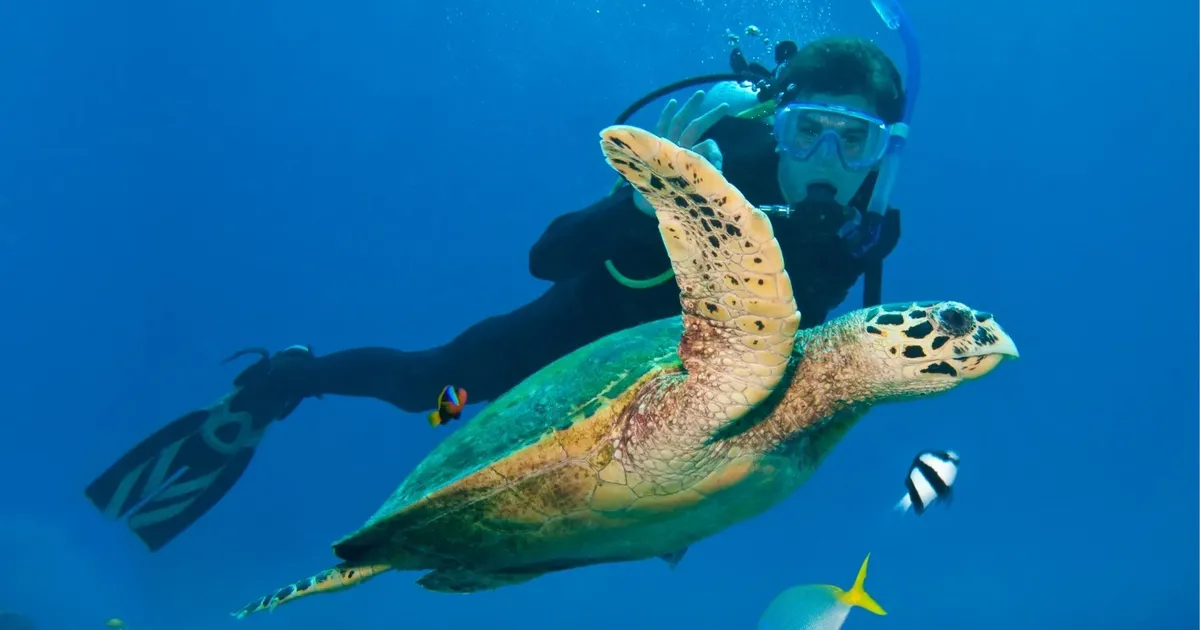
You do not need a scuba certificate to dive the Great Barrier Reef from Cairns. Complete beginners can make an introductory dive with an instructor, certified divers can book a day boat with two or three dives, and divers with more time can spend three days on an outer reef liveaboard. Cairns suits diving because its boats can reach a large group of offshore reefs instead of taking everyone to one fixed spot.
- Never dived before? Book an outer reef day trip with one introductory dive.
- Certified, with one day? Choose a dive-focused boat that visits more than one outer reef site.
- Certified, and diving is why you came? A three-day liveaboard is a far better use of your time.
- Want the certificate? Cairns courses pair pool training with qualifying dives on the reef.
- Travelling with snorkellers? Many Cairns boats take snorkellers, first-time divers and certified divers together.
Check Availability
Quick answer: Is Cairns good for scuba diving the Great Barrier Reef?
Yes. Cairns is one of the easiest places in Australia to arrange both a first dive and certified diving on the reef. The water runs roughly 22°C to 29°C through the year, and an introductory dive needs no previous experience, only comfort in the water and a pass on the operator’s medical questions.
The biggest advantage is not just being close to the reef. It is the range of ways to dive:
| If you are | Best option | A trip to look at first |
|---|---|---|
| A complete beginner | One introductory dive on an outer reef day | Divers Den reef day, $179 plus the dive |
| Curious but nervous | A day boat with an intro dive and snorkelling | Ocean Freedom coral cay cruise, two divers per instructor |
| Open Water certified | A two or three-dive outer reef day | Silverswift three-site trip, $216 plus dives |
| An experienced diver | A dive-focused multi-site day boat | Divers Den reef day |
| Staying three or more days to dive | A liveaboard | Pro Dive 3-day liveaboard, $768 |
| After a certificate | An Open Water course in Cairns | Divers Den 4-day PADI course, $733 |
| Travelling with a non-diver | A mixed snorkel and dive boat | Passions of Paradise catamaran, $193 |
| Keen on night diving | A liveaboard | Coral Sea Dreaming 2-day liveaboard, $470 |
| Hoping for dwarf minke whales | A specialist northern reef trip in June or July | Book with a permitted minke operator |
Tourism Queensland describes Cairns as a gateway for outer reef diving, dive courses, day trips and liveaboards. Prices here are GetYourGuide’s from-prices per person in US dollars on the day we checked; on most day boats that is the snorkel fare, and the dive is added when you book.
Introductory diving vs certified diving: what’s the difference?
Understand this before you compare boats.
Introductory diving
An introductory dive, also called a resort dive, discovery dive or first-time dive, is for someone with no scuba certificate. You don’t just put on a tank and jump in. Before you go deeper, the instructor normally covers:
- how the regulator works
- breathing underwater
- equalising your ears
- hand signals
- clearing water from your mask
- finding and replacing your regulator
- buoyancy and body position
- what to do if you feel uncomfortable
Tourism Queensland’s first-dive guide describes practising equalising, mask clearing, regulator recovery and hand signals before the dive carries on. Then you dive under close supervision.
Queensland’s recreational diving regulation requires a qualified instructor to supervise anyone diving without a certificate, with no more than four uncertified divers per instructor, or six with a certified assistant. Some boats keep it smaller still: on the Ocean Freedom coral cay cruise (our breakdown) it is two divers to one instructor on a first dive.
Do you need certification for an introductory dive?
No. That is exactly what an introductory dive is for. You do have to meet the operator’s:
- minimum age
- medical requirements
- basic comfort in the water
- safety check on the day
On the Divers Den reef day the minimum age for the introductory dive is 12, and the Reef Magic and Coral Sea Dreaming listings also set 12 as the minimum diving age. Rules can differ between programs, so check the trip you book.
Certified diving
If you hold an Open Water certificate or higher from PADI, SSI or another recognised agency, you book as a certified diver and skip the training part of the day. A typical Cairns dive boat offers:
- two or three dives
- dives at more than one site
- full equipment hire
- tanks and weights only, if you bring your own gear
- guided dives
- buddy diving on some boats
- snorkelling between dives
The Silverswift three-site trip (our breakdown) allows up to three guided dives at three reef sites, and Divers Den says its AquaQuest reef day offers certified divers up to three dives as well.
Which is better: an introductory dive or learning to dive properly?
If you have one free day in Cairns and mainly want to know what breathing underwater feels like, book an introductory dive. If you already suspect you will want to dive again, think about the certificate. An introductory dive gives you an experience; an Open Water course gives you a qualification you can use anywhere in the world.
Cairns is a good place to learn because your qualifying dives happen on the Great Barrier Reef, not in a cold quarry or a training lake. The courses here usually combine:
- theory
- pool training
- qualifying dives on the outer reef
The Divers Den 4-day PADI Open Water course pairs two days of pool and classroom training with two outer reef day trips and four open water dives, for $733, rated 4.7 from 51 reviews. Pro Dive Cairns runs its training on a liveaboard: the Pro Dive 5-day learn to dive course adds two days in the pool to a three-day, two-night trip with nine dives on the reef, for $923. It has only 8 reviews so far, all five stars, so treat the rating as early. The Divers Den course also asks you to swim 200 m and tread water for 10 minutes, and both start with the medical questionnaire.
Day trip or liveaboard?
For certified divers, this is the biggest decision.
Choose a day trip if:
- you have only one free day
- diving is one part of a wider Cairns holiday
- you are travelling with snorkellers
- you don’t want to sleep on a boat
- two or three dives will be enough
- it is your first dive after a long break
Choose a liveaboard if:
- diving is a main reason for your trip
- you want to night dive
- you want sunrise and early-morning dives
- you want far more dives for your travel time
- you want several days of changing reef conditions
- you would otherwise book two or three separate day boats
The gap is bigger than it looks. A day trip gives you two or three dives. The Pro Dive 3-day liveaboard includes 11 dives, nine by day and two at night, at 19 sites across four outer reefs; Pro Dive names them as Flynn, Thetford, Milln and Pellowe. It runs roughly three day dives and a night dive on the first two days and three day dives on the last. It costs $768, rated 4.6 from 32 reviews, and Pro Dive collects a reef tax of AUD 100 at check-in.
If you are already certified and came to Cairns to dive, a liveaboard is not a day trip with a bed attached. It is a different way of seeing the reef. Our liveaboard picks are on the diving page.
What is the Outer Great Barrier Reef?
One common mistake is to picture every Cairns boat heading to one place called “the Great Barrier Reef”. They don’t. The reef runs for thousands of kilometres along the Queensland coast, and the Cairns operators hold access to different reefs, sites and moorings offshore. Day boats and liveaboards may visit:
- Norman Reef
- Saxon Reef
- Hastings Reef
- Flynn Reef
- Milln Reef
- Thetford Reef
- Pellowe Reef
The site can change with the weather, tide, current and visibility, and that flexibility helps you. The reef in an operator’s photos may not be the best dive on the morning of your trip, and good crews choose by conditions. Pro Dive says plainly that its itinerary can change with the weather, tides and currents.
Best Great Barrier Reef dive sites from Cairns
There is no single best site. Different reefs suit different things, and the conditions on the day matter enormously.
Norman Reef
A well-known outer reef that Cairns day boats visit often, with coral gardens, reef fish, bommies, sandy patches, turtles and larger reef species. Divers Den lists Norman among the reefs its AquaQuest boat uses. It suits a first outer reef dive in a classic reef setting.
Hastings Reef
Another established outer reef with many moorings, where you may find hard and soft coral, bommies, tropical fish, turtles, rays and reef sharks. It works well for boats carrying both snorkellers and divers; the Down Under Cruise and Dive day (our breakdown) sells one intro or certified dive at Saxon and Hastings reefs, from $193.
Saxon Reef
Saxon sits between Norman and Hastings. Its value is choice: one more reef that lets the skipper pick by the day’s conditions instead of being tied to one place.
Flynn Reef
Flynn is closely linked with multi-day diving from Cairns and has many separate dive sites. Pro Dive includes it among the four reefs on its three-day liveaboard, and the Coral Sea Dreaming liveaboard (our breakdown) chooses from 25 moorings across nine reefs, Flynn and Milln among them. It suits certified divers and liveaboard trips.
Milln Reef
Another outer reef used by liveaboards and dive boats. Expect the terrain to change from site to site: coral gardens, bommies, channels and deeper reef edges can make very different dives within one named reef. It suits divers who want more than one underwater landscape.
Thetford Reef
Part of several Cairns dive itineraries, and most useful as one stop on a multi-reef trip. It suits multi-day divers more than anyone set on ticking off a famous name.
What marine life can you see while diving from Cairns?
Nothing in the sea is guaranteed, but the outer reef holds a huge variety of life. Divers commonly hope for:
- green sea turtles
- hawksbill turtles
- butterflyfish
- angelfish
- parrotfish
- damselfish
- clownfish
- anemones
- wrasse
- giant clams
- stingrays
- reef sharks
- schools of tropical fish
- hard and soft corals
Pro Dive lists turtles, stingrays, reef sharks, giant clams and plenty of tropical fish among the animals its divers meet regularly.
Dwarf minke whales
One animal deserves its own mention. Dwarf minke whales visit the northern Great Barrier Reef each winter, mostly in June and July. The Reef Authority says sightings are concentrated around the Ribbon Reefs, well north of the Cairns day-boat reefs, and swims with them are tightly managed through permitted operators. Don’t book an ordinary Cairns day dive expecting a minke. If they are a goal, look for a specialist northern reef expedition or liveaboard timed for their short season.
What is the best time of year for scuba diving from Cairns?
You can dive from Cairns all year. No month makes the reef suddenly good or bad. The more useful split is between the cooler, drier months and the warmer, wetter ones.
May to October: drier and cooler
This is Cairns’ dry season. Expect lower humidity, less rain, cooler water, a busy tourist season, excellent diving and whales on the move. Tourism Queensland names roughly May to October as the reef’s peak season, with less rain.
November to April: warmer and wetter
Summer brings warmer seas, higher humidity, more rain, tropical weather systems, stinger suits and some excellent days underwater. Wet season does not automatically mean poor diving: Tourism Queensland notes that November to April can bring excellent clarity under the surface despite the weather above it.
Coral spawning
These months also include one of the reef’s great natural events. The Great Barrier Reef Marine Park Authority says mass coral spawning commonly happens one to six nights after the full moons of October, November and December, and outer reefs often spawn later than inshore ones. It is spectacular, but you can’t count on seeing it just because you travel in November, because the timing is never certain.
Great Barrier Reef water temperature by month
Pro Dive Cairns publishes these average sea temperatures for the reefs off Cairns:
| Month | Average water temperature |
|---|---|
| January | 29°C |
| February | 29°C |
| March | 28°C |
| April | 26°C |
| May | 26°C |
| June | 25°C |
| July | 24°C |
| August | 22°C |
| September | 23°C |
| October | 26°C |
| November | 26°C |
| December | 27°C |
Even 24°C starts to feel cool after a long time underwater, so wear a wetsuit for warmth as well as protection. Most dive boats include one; Pro Dive’s learn-to-dive liveaboard supplies a 5 mm wetsuit.
When is visibility best?
Be wary of any guide that gives Cairns visibility as a fixed number of metres for a particular month. It depends on:
- wind
- waves
- tides
- rainfall
- currents
- plankton
- recent weather
- the reef
- which side of the reef you dive
That is another reason to value operators with several moorings. Don’t chase a visibility figure months ahead; choose a boat that can pick whichever site suits the day.
What does an Outer Reef dive day actually look like?
Schedules vary, but a typical day on a Cairns dive boat runs roughly like this:
- 8:00am: check in at Marlin Marina.
- 8:30am: leave Cairns. Safety and dive briefings usually happen on the way out.
- About 10:00am: reach the outer reef. Divers kit up for the first dive while snorkellers get in.
- Late morning to early afternoon: dive, surface interval, lunch, and a move to a second site if the plan and conditions allow.
- Afternoon: the second or third dive.
- About 3:00pm: leave the reef.
- About 4:30pm: back in Cairns.
The Divers Den AquaQuest day follows almost exactly this pattern, with an 8am check-in, an 8:30 departure, the first site at about 10am and a 4:30pm return. Its GetYourGuide listing gives about 2.75 hours at the first site and 1.5 hours at the second.
How much does scuba diving from Cairns cost?
Prices change, so treat these as October 2026 examples, not fixed rates.
Introductory diving
Most day boats sell the snorkel day and add the introductory dive as an option at booking. The Divers Den reef day starts at $179 for the snorkel fare, with up to five hours at two outer reef sites, and the first dive is added on top. The Reef Magic culture day (our breakdown) starts at $174, the lowest full outer reef day on this site, and the intro or certified dive is part of your ticket when you choose that option. Always compare the final price at checkout, not the headline fare.
Certified day diving
The structure is the same for certified divers: a cruise fare, then the dives. The Silverswift three-site trip starts at $216 before up to three guided dives, and the Ocean Freedom coral cay cruise starts at $203 before two dives with a guide. Tank-and-weights rates are usually lower if you bring your own gear. Compare the total, including:
- the cruise fare
- the number of dives
- equipment
- a guide, if you want or need one
- the reef charge, AUD 8.50 per person for a full day from 1 April 2026
- any fuel surcharge
- transfers
- other extras
Liveaboards
The Pro Dive 3-day liveaboard costs $768 with 11 dives, two nights on board, meals, all dive gear including a computer, and transfers from Cairns city hotels, plus the AUD 100 reef tax. That looks expensive next to a day trip, but per dive it is good value for anyone who plans to dive a lot. The Coral Sea Dreaming 2-day liveaboard costs $470 for the snorkelling, meals and a bunk on a 16-metre boat with no more than 12 guests, and every dive is paid on board.
What is normally included?
A good Cairns dive day usually includes:
- the boat from Cairns
- tanks
- weights
- BCD
- regulator
- mask
- fins
- a wetsuit or Lycra suit
- a dive briefing
- supervision
- lunch
- drinking water
- tea and coffee
- snorkel gear
Some boats also include:
- prescription masks
- guided dives
- guided snorkelling
- dive computers
- hot freshwater showers
The Divers Den reef day, for example, includes prescription masks, a guided snorkel tour and hot showers, but charges for guided certified diving. Never assume a cheap fare includes the same things.
Guided vs unguided certified diving
This surprises some visiting divers. Depending on the boat and your experience, you may be able to follow a divemaster or instructor, or dive on your own with a buddy.
For a first dive on the Great Barrier Reef, a guide is worth it even if you are perfectly competent. A guide already knows:
- the layout of the reef
- where the animals hide
- the currents
- the navigation
- the way back to the boat
So you spend less of your bottom time wondering whether you are heading the right way. If you are newly certified, rusty or simply want to see as much as possible, choose a guided dive. On the Coral Sea Dreaming liveaboard every dive has a guide or instructor.
I haven’t dived for years. Can I still go?
Usually, yes, but tell the operator how long it has been. A certificate card does not mean your skills are fresh. A refresher makes sense if you have forgotten:
- mask clearing
- buoyancy
- regulator recovery
- alternate-air procedures
- how to use a dive computer
- safety stops
- hand signals
Some operators offer a guided orientation or suggest a refresher before your reef day, and Pro Dive Cairns sells a pool-based scuba refresher. If your last dive was years ago, asking in advance beats discovering at the back of the boat that you no longer remember how your BCD works.
Medical requirements: read this before booking
This is one of the most important parts of this guide. Don’t hide a medical condition because you are worried about losing your booking.
Queensland law requires anyone doing an introductory dive or an entry-level course dive to complete a medical declaration, and some answers lead to a further medical assessment. Every diver on the Cairns boats fills in a medical questionnaire, and the listings say plainly that some conditions and medicines can rule diving out. The questions can cover:
- heart or circulation
- lungs or breathing
- asthma
- epilepsy or seizures
- recent surgery
- ear or sinus problems
- pregnancy
- diabetes
- medication
- anything else that affects safe diving
Requirements depend on the kind of dive and your circumstances, and some operators are stricter: Down Under Cruise and Dive asks divers over 45 on its PADI courses for a doctor’s clearance. If you have any doubt, contact the operator before booking and ask whether you need a dive medical, especially if you are flying in from overseas and would otherwise only find out in Cairns.
Can you scuba dive with asthma or another medical condition?
Possibly, but a travel guide cannot decide that for you. Some conditions do not rule diving out on their own; others need a check by a doctor who knows dive medicine. The useful questions are:
- What condition do you have?
- How well controlled is it?
- What medication do you take?
- Does the dive operator need a medical clearance?
- Does a doctor familiar with dive medicine consider you fit to dive?
Don’t let a website stand in for a medical assessment.
Flying after scuba diving: don’t book the Reef on your last morning
This mistake can wreck a Cairns itinerary. Diving puts your body under extra pressure, and flying soon afterwards lowers the pressure again, which can raise the risk of decompression sickness. Divers Alert Network recommends a minimum surface interval of:
- 12 hours after a single no-decompression dive
- 18 hours after several dives in a day, or several days of diving
- longer after dives that needed decompression stops
DAN also stresses that waiting longer lowers the risk further. Some Cairns operators are more cautious: Pro Dive recommends not flying within 24 hours of diving after its liveaboards, and the Reef Magic listing asks for 12 to 24 hours depending on your dives. The same applies to a scenic flight over the reef.
Practical recommendation
Make the day after your last dive a non-diving day in Cairns if you can. Spend it in the rainforest, around town or by the pool, and fly the day after. It makes planning easier and adds a useful safety margin.
What about driving to altitude after diving?
Flying is not the only issue. DAN notes that driving up to higher ground can also add to decompression stress after diving. That matters here, because the Atherton Tablelands inland from Cairns sit several hundred metres higher than the coast. If your plans after diving involve driving up into the hills, talk to your dive operator about timing, not only about flights.
What about stinger season?
Around Cairns, the marine stinger season runs roughly from November to May, according to Cairns Regional Council. Reef diving does not stop. Dive and snorkel boats keep running through the warmer months and supply protective suits. Think “wear the protection the crew recommend”, not “avoid Cairns for half the year”. Our best time to visit guide covers the seasons.
Is diving better than snorkelling on the Great Barrier Reef?
Not for everyone, which may sound odd in a diving guide. Some coral grows very close to the surface, and there a snorkeller gets an excellent view in bright sunlight with the reef right below. Scuba comes into its own when you want to:
- stay underwater longer
- explore reef walls and bommies
- look under ledges
- watch animals at depth
- move through the reef in three dimensions
- stay down instead of bobbing back to the surface
Choose snorkelling if:
- you are uncomfortable underwater
- you would rather skip the dive medical
- you want the most freedom on the day
- you prefer staying near the surface
- cost matters more than depth
Choose scuba if:
- the underwater world is a main reason for your trip
- you are comfortable with the equipment
- you want long stretches below the surface
- you are already certified
- you want night or multi-day diving
If you are not sure, book a trip that includes snorkelling with an optional introductory dive. If scuba turns out not to be for you, you still have a full snorkelling day. Our snorkelling guide covers that side.
Is the Great Barrier Reef good for beginner divers?
Yes, if you choose the right trip. Cairns is beginner-friendly because introductory diving is an everyday part of the reef trade here, not a special request. A good trip for a beginner has:
- an instructor supervising you
- a purpose-built dive boat
- an easy way into the water
- sheltered sites to choose from
- enough time for the briefing and the skills
- snorkelling if you decide not to dive
An outer reef boat with several moorings helps most, because the crew can adapt the day to the conditions. The Divers Den AquaQuest day (our breakdown) runs a purpose-built dive boat with a sunken platform for getting in and out, rated 4.6 from more than 1,500 reviews.
Is scuba diving scary the first time?
The strangest moment is usually not seeing a shark. It is the first breath underwater. Your brain knows people don’t breathe down there, so even with the regulator working perfectly, some beginners want to hold their breath or lift their head.
The answer is not bravery. It is slowing down. Listen to the instructor, breathe normally, practise the skills and take the descent gently.
The other common problem is ear pressure. Equalise early and often instead of waiting until your ears hurt; Tourism Queensland’s first-dive advice says the same. If something doesn’t feel right, tell your instructor. Nobody gives a prize for the fastest descent.
Will I see sharks?
Possibly, and most divers would call that good news. Reef sharks live on the Great Barrier Reef and you may meet them on a dive. They are part of the reef, not an emergency. Follow the crew’s instructions, don’t chase anything, and let the animal decide how close it comes. The same goes for turtles, rays and everything else: the best encounters happen when you stop trying to make one happen.
Should I touch the coral?
No. Do not:
- stand on coral
- hold coral for a photo
- collect coral
- chase turtles
- grab marine animals
- feed wildlife unless it is part of a permitted activity
- kick the reef with your fins
Tourism Queensland’s diving advice asks divers not to touch or stand on coral or collect marine life. On a coral reef, good buoyancy is not just a diving skill; it is how you protect the reef.
What should you bring on a Cairns dive trip?
The main trips provide the equipment, so you don’t need a suitcase of dive gear. Bring:
- swimwear
- a towel
- dry clothes
- a reusable water bottle
- a hat
- sunglasses
- reef-friendly sunscreen
- your certification card, if you are certified
- your logbook or digital certification details if asked
- any medical certificate you need
- seasickness tablets if you need them
Certified divers who prefer their own gear may bring:
- mask
- dive computer
- regulator
- BCD
- fins
If you own gear, pack a mask and a computer first. A mask you know fits is worth a surprising amount underwater.
Seasickness: worth planning for
The run from Cairns to the outer reef crosses open water, and a calm marina at 8am does not promise a flat crossing. If you get seasick:
- use a medicine you know suits you
- take it at the recommended time, not once you feel ill
- sit where the crew suggest
- look at the horizon
- drink water
- skip the huge greasy breakfast
Ask a pharmacist or doctor if you are not sure which medicine to take, especially since some cause drowsiness or may not suit diving.
Should you book two or three dives?
For a certified diver on a day trip, three dives makes sense if:
- the boat offers them
- you have dived recently
- you are not flying soon afterwards
- you are comfortable with repeat dives
Having travelled all the way to the outer reef, it seems a shame to spend the last dive sitting on the boat. Two dives may suit you better if:
- you have been out of the water for a long time
- you tire easily
- you are travelling with snorkellers
- you want a more relaxed surface interval
- you are still getting your confidence back
Should beginners book one or two introductory dives?
For most first-time divers, one dive is enough to find out whether you love it. Book two if:
- you have always wanted to dive
- you are comfortable swimming
- you expect the first dive to be partly about getting used to the gear
- your boat makes a second dive easy to add
The second introductory dive can feel very different, because the first few minutes of “I’m breathing underwater!” are behind you and you can pay more attention to the reef.
Can certified divers and beginners travel on the same boat?
Often, yes, and it is one of the best things about Cairns for mixed groups. A couple or family does not have to choose between the divers’ tour and everyone else’s. Many outer reef boats carry snorkellers, introductory divers and certified divers at the same time, and Divers Den says its introductory and certified divers travel together and dive at the same reef sites. The Passions of Paradise catamaran (our breakdown), the most-reviewed reef cruise from Cairns at 4.8 from more than 3,800 reviews, sells introductory and certified dives on top of its snorkel day.
How to choose a Cairns scuba-diving tour
Ignore the glossy photos for a minute and compare these.
1. How many reef sites can the operator use?
More choice gives the skipper more room to find good conditions.
2. How many sites will you visit that day?
One, two and three-site trips make for different days.
3. How many dives are included?
“Up to three dives available” is not the same as “three dives included”.
4. Is equipment included?
Check exactly what “equipment” covers.
5. Are certified dives guided?
Some boats include a guide; others charge for one.
6. How long do you spend at the Reef?
Travel time and reef time are not the same thing.
7. Is the boat dive-focused?
A big pontoon can be excellent for families, but it is not automatically the best choice for an experienced diver.
8. Are you travelling with non-divers?
If so, think about their day too.
9. When did you last dive?
You may want a refresher or a private guide.
10. When are you flying?
Check this before you pay.
Day boat vs pontoon vs liveaboard for scuba divers
| Trip | Best for | Main weakness |
|---|---|---|
| Multi-site dive boat | Certified divers, active snorkellers | Fewer dry activities |
| Pontoon | Families, non-swimmers, mixed groups | Diving can feel like a side activity |
| Island trip | A beach and reef together | Rarely the best choice for serious diving |
| Liveaboard | Divers who want the most time underwater | Higher cost and more days |
The best Great Barrier Reef tour and the best Great Barrier Reef dive tour are not always the same boat. A pontoon such as the Reef Magic five-hour pontoon day sells dives as an extra, but its strength is the day it gives non-divers.
Is Green Island good for scuba diving?
You can dive at Green Island, including a first dive, and it makes sense if you also want a beach, rainforest, island time and things for non-divers to do. Tourism Queensland notes that first-time divers can train before diving offshore from Green Island, and experienced divers can explore sites such as the Pinnacle. The Big Cat Green Island day with diving costs $175 and is rated 4.9, but from only 10 reviews so far.
If the quality and amount of diving come first for you, look at an outer reef dive boat before an island day. Green Island is at its best as a mixed island and reef day. When the question is simply “where should I go from Cairns if I really want to dive?”, the outer reef is the natural place to start. Our Green Island tours page has the island trips.
Is a liveaboard worth it?
For a newly certified diver who loved their first day: very possibly. For an experienced diver: usually yes, if your trip has room for it. For someone who simply wants to say they dived the Great Barrier Reef: probably not.
A liveaboard is worth it for:
- many more dives
- no daily commute out and back
- night diving
- sunrise diving
- several reefs
- several days of changing conditions
- days given over to diving, not to the tourism around it
The Pro Dive 3-day liveaboard gives you 11 dives where a day trip gives two or three. That is the simplest argument for staying out overnight. For a shorter taste, the Divers Den overnight boat trip costs $435 with snorkelling, meals and hotel transfers, with dives added on board, rated 4.4 from 76 reviews.
Bottom line
Cairns is one of the easiest gateways for diving the Great Barrier Reef because it works at almost every level. You can arrive never having worn a regulator and make your first supervised dive on the outer reef. You can arrive with an Open Water card and do two or three dives in a day. Or you can arrive with a full logbook and spend three days moving between outer reefs, night dives included.
For most visitors:
- First ever dive: an outer reef day boat with one introductory dive.
- Certified, with one day: a dive-focused multi-site boat offering three dives.
- Certified, with three days: seriously consider a liveaboard.
- Divers and snorkellers together: a boat that takes certified divers, introductory divers and snorkellers.
- A beach matters as much as the diving: Green Island.
And don’t put the dive on the morning before your flight home. The reef deserves more time than that, and so does your surface interval.
Frequently asked questions
Can you scuba dive the Great Barrier Reef from Cairns without certification?
Yes. Cairns operators run introductory dives for people without a certificate, supervised by an instructor. You must meet the operator’s age, medical and safety requirements, and Queensland law sets how many uncertified divers each instructor may take.
How deep do beginner dives go on the Great Barrier Reef?
It depends on the program and the day. Divers Den says its introductory dives from Cairns go to about 12 m (40 ft).
How many dives can you do on a Cairns day trip?
Certified divers can usually do two or three. Some introductory trips also allow more than one dive.
How many dives can you do on a Cairns liveaboard?
It depends on the trip. The Pro Dive 3-day liveaboard includes 11 dives, two of them at night.
What are the best reefs for scuba diving from Cairns?
The main diving areas include Norman, Hastings, Saxon, Flynn, Milln, Thetford and Pellowe reefs. Which is best on a given day depends on the weather, current, visibility and the site.
Is the Outer Reef better than Green Island for scuba diving?
If diving is your priority, choose an outer reef dive trip. Green Island is better when you want an island, beach, rainforest and reef in one day.
Can beginners scuba dive at the Great Barrier Reef?
Yes. Introductory dives are designed for people without a certificate. You get tuition and skills practice, then dive under close supervision.
What is the best month to dive the Great Barrier Reef from Cairns?
There is no single best month, and boats dive all year. May to October is drier and cooler; November to April is warmer and wetter and can still bring excellent clarity. June and July bring dwarf minke whales to the Ribbon Reefs further north.
Is it safe to scuba dive during stinger season?
Reef trips continue through the warmer months. Follow the crew’s instructions and wear the suit they supply. Around Cairns, stinger season runs roughly from November to May.
Can I fly after scuba diving at the Great Barrier Reef?
Not straight away. DAN recommends at least 12 hours after a single no-decompression dive and at least 18 hours after repeat or multi-day diving, and some Cairns operators recommend 24 hours after their liveaboards.
Do I need a medical certificate to scuba dive in Cairns?
Not everyone does. Introductory and entry-level divers must complete a medical declaration, and some answers mean you need a doctor’s assessment or clearance before you dive.
Can snorkellers and scuba divers go on the same Great Barrier Reef tour?
Yes. Several Cairns boats carry snorkellers, first-time divers and certified divers together, which suits couples and families with different abilities.
Ready for a first dive? Check availability on the Divers Den reef day for your dates.
Two Outer Reef Sites, One Day on a Catamaran
Snorkelling gear and a guided snorkel tour, a chef-prepared lunch, morning and afternoon tea, and a marine life talk on board. Rated by more than 3,800 guests, with free cancellation.
Check Availability & Book